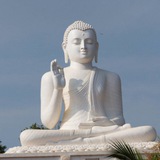
Forwarded from Buddha
Thirteen Dhutanga Practices
There do exist thirteen ascetic practices: two for the robes, five for the food, five for the spot of residence, and one for the posture (known to be the dhutanga of effort).
1. pamsukula : abandoned robes
2. tecivarika : three robes
3. pindapata : collection by means of one's bowl
4. sapadanacarika : food collection without skipping houses
5. ekasanika : a single meal
6. pattapindika : everything within the bowl
7. khalupacchabhattika : no longer accepting any extra food after having started to take the meal
8 arannika : to remain in the forest
9. rukkhamula : to remain beneath a tree
10. abbhokasika : to remain on the bare earth without shelter
11. susanika : to remain among charnels
12. yathasantatika : to sleep at the alloted spot
13. nesajjika : to renonce to the lying posture
The Origins of Thirteen Ascetics Practices
Long before Buddha appeared into this world, there did exist ascetic practices designed for oppressing the body in as variegated as numerous ways. Those who adopted them believed that they would enable them to get liberated from the sorrow any living being. On the other hand, others were convinced that the ultimate goal of existence lied in knowing how to enjoy it to the full and focused all their efforts on best enjoying sensuous pleasures.
From his very first teaching, Buddha categorically rejected these two paths that he qualified of extreme paths. In this teaching, he explains us that only the moderate path, the middle path, can lead us to the development of wisdom and right knowledge of reality. The two extreme paths develop, on their behalf, attachments and false views, contrary to the moderate path, which enables the lessening of attachments and the development of right view.
The conduct laid down by the Blessed one for monks and nuns (the patimokkha), for novices (the 10 precepts) and for the laity (the 5 or 8 precepts) is sufficient guidance to anyone who conveniently trains into satipatthana. To those who wish to much more rapidly or easily reach nibbana, he also taught a set of ascetic practices which are non-compulsory (the 13 dhutangas that are not included into the vinaya), which enables to reduce one's needs to the least, thus sparing, the one who adopts these practices, from pride, greed, and aversion, which constitute the main poisons on the path to liberation (only by practising certain dhutangas in daily life can we really understand this fact; results are impressing).
Dhutangas are not designed for superior beings, neither for inferior beings. They are beneficial for all those who are able to put them into practice. A dhutanga is not an extreme practice; it is a mere practice that enables the mind to be rapidly and easily purified, absolute prerequisite to the development of attention and concentration. It reduces useless impediments, such as excessive food, numerous clothes to look after, the agitation of inhabited areas, very various attachments. Provided it is conveniently adopted, no dhutanga does cause to arise any kind of tiredness or oppression of the body or the mind. If a dhutanga involves a great difficulty or a difficult effort to an individual, he shouldn't practice it, as it would become a practice extreme for himself.
Everyone is free, according to his capacities and wishes, to adopt one or several dhutangas, which each comprises three levels of restriction. The aim of these practices lies in providing an environment as auspicious as possible for renunciation.
Thus, the 13 dhutangas, which mean " renunciation " [to abandon (dhuta); state of mind (anga)], are a set of practices designed for considerably reducing our attachments, in order to reach nibbana at the soonest, like a bird that crosses the cloudless sky on a straight line.
===
Words of the Buddha channel:
https://xn--r1a.website/wordsofbuddha
===
Telegram
Words of the Buddha
Daily teachings of Buddha Dharma
❤1👍1🫡1
Forwarded from Words of the Buddha
The Crystal Sanctuary (Hall of mirrors) at the Crystal Temple, Wat Tha Sung Buddhist temple complex, Uthai Thani, Thailand.
🔥1🤩1😎1
9. Sãladassanasampannam
dhammaññham saccavedinam
Attano kammakubbànam
tam jano kurute piyam. 217.
THE VIRTUOUS ARE DEAR TO ALL
9. Whoso is perfect in virtue, 7 and insight, 8 is established in the Dhamma, 9 has realized the Truths, 10 and fulfils his own duties 11 - him do folk hold dear. 217.
Story
Some youths carrying cakes went past the Buddha and the Sangha, making no offering to them. In the rear they saw the Venerable Kassapa. Taking a liking to him, they offered him some cakes. The Venerable Kassapa advised them to offer some to the Buddha and the Sangha, who were sitting by the wayside. The monks were indignant, remarking that it was favouritism. Thereupon the Buddha declared that the Venerable Kassapa was dear even to the gods and uttered this verse.
===
Buddha dharma teachings channel:
https://xn--r1a.website/lorddivinebuddha
===
Telegram
Buddha
Buddha dharma teachings from the suttas and commentaries
🙏2👏1
Forwarded from Words of the Buddha
“In the wilderness, at a tree’s root, or an empty hut, O mendicants, recollect the Buddha, and no fear will come to you.
If you can’t recollect the Buddha—the eldest in the world, the chief of men—then recollect the teaching, emancipating, well taught.
If you can’t recollect the teaching—emancipating, well taught—then recollect the Saṅgha, the supreme field of merit.
Thus recollecting the Buddha, the teaching, and the Saṅgha, mendicants, fear and terror and goosebumps will be no more.”
SN 11.3 : Dhajaggasutta
🕊1🎄1
Forwarded from Words of the Buddha
Thirteen Thudong Practices
Here are the five factors which each practitioner of the dhutangas should develop:
1. To be without greed.
2. To know how to be contented with very little.
3. To really want to get rid of kilesas.
4. To remain on a calm spot.
5. To no longer wish any extra existence in whatsoever world and conditions (in other parlance, wishing parinibbana).
The first factors are against greed. They contribute in eliminating sensory desires. The might whose the last of these factors is object can be cultivated by means of wisdom.
Through alobha we eliminate pratices that are meant for developing sensory desires (kamasukhallika nuyoga), and through amoha, we eradicate all practices that oppress the body (attakilamatha nuyoga).
Buddha congratulates those who adopt the dhutangas by fully developing the above mentioned five factors.
According to another commentary, the factors needed to the practice of dhutangas are:
saddha, faith, confidence.
hirima, the fact to be afraid or ashamed of evil deeds.
dhitima, the fact to be calm, self-possessed and concentrated on one's deeds.
akuha, the indifference towards notoriety, renown, consideration on others' behalf.
atthavasi, the fact to have the realisation of dhamma as unique aim.
alobha, straightforwardness.
sikkhakama, the fact to be naturally and constantly virtuous.
alhasamadana, the fact to prevent oneself from breaking one of these practices.
anujjhanabahula, the fact not to criticize others, even if they are at fault.
mettavihari, the fact to constantly remain filled with benevolence.
A serious practitioner of the dhutangas has to be conveniently rooted into one of these ten factors. The one who knows how to stick to it is in the position to reach nibbana.
The elements that ought to be avoide:
papiccha, to want unhealthy things.
icchapakata, to oppress one's mind through desires.
kuhaka, to try to draw consideration from others.
luddha, covetousness, cupidity.
odarika, to be abusively preoccupied by one's food.
labhakama, to want to get involved into numerous matters.
yasakama, to want to have many disciples, to want to be worshipped by many people.
kittikama, to want notoriety, a great renown.
If a bhikkhu practises the dhutangas according to one or several of these eight points, he will certainly be subject to criticism and contempt on others' behalf. He even risks to experience some disabilities during his next existence, such as ugliness, malformation, a severed limb, if it is not the realm of hells. That's why one should strive for developing the needed factors, and to avoid those who are detrimental.
===
Dhammapada, beloved and favorite teachings of the Buddha channel:
https://xn--r1a.website/dhammapadas
===
Telegram
Dhammapada - Buddha Dharma Teachings
Daily teachings of the Dhammapada, beloved and favorite teachings of the Buddha
🙏1💯1
Forwarded from Words of the Buddha
Paper lamp festival on Purnima, Vesak celebration, Borobudur temple, Java island, Indonesia.
❤2🔥1👏1
Forwarded from Words of the Buddha
Free Buddha Dharma ebook
Things as They Can Be
Essays on the Buddhist Path
By Thanissaro Bhikkhu
Free download available:
https://www.dhammatalks.org/Archive/Writings/Ebooks/Things_asTheyCanBe_260116.pdf
===
👍1👏1🙏1
Forwarded from Words of the Buddha
Free Buddha Dharma ebook
Things as They Can Be
Essays on the Buddhist Path
By Thanissaro Bhikkhu
The tenth collection of essays: In the Context of the Deathless, The View from Outside the World, The Desire for Awakening, The Kamma of Goodwill, All about Acceptance, In the Same Way, To Feed Is to Suffer, The Desire to Make a Difference, Things as They Can Be, A Beam of Light that Doesn’t Land, and Deep like the Ocean.
Free download available:
https://www.dhammatalks.org/Archive/Writings/Ebooks/Things_asTheyCanBe_260116.pdf
===
👍1👏1💯1
10. Chandajàto anakkhàte
manasà ca phuño siyà
Kàmesu ca appañibaddhacitto
uddhamsoto'ti vuccati. 218.
THE NON-ATTACHED GO UPSTREAM
10. He who has developed a wish for the Undeclared 12 (Nibbàna), he whose mind is thrilled (with the three Fruits 13), he whose mind is not bound by material pleasures, such a person is called an "Upstream-bound One". 14 218.
Story
Some pupils inquired of their preceptor, who had attained Anàgàmi (Never-Returner), whether he had attained any stage of Sainthood. The preceptor did not answer the question as even lay followers could become Anàgàmis. He waited until he would attain Arahantship. Unfortunately he died and was reborn in a Pure Abode (Suddhàvàsa) where never-Returners seek birth until they attain Arahantship. The pupils went to the Buddha weeping. The Buddha remarked that death was inevitable. They replied that they were sorry as the preceptor had died without answering their question. Thereupon the Buddha uttered this verse.
===
Words of the Buddha channel:
https://xn--r1a.website/wordsofbuddha
===
Telegram
Words of the Buddha
Daily teachings of Buddha Dharma
👍1🙏1
Buddhanussati, one of the four protective meditation, is recollections of the qualities of the Buddha, namely, araham (the perfect one who has eliminated all the defilements, or someone who has reached the state of great purity and perfection), Sammasambuddho (fully enlightened), Vijjacarana-sampanno (impeccable in conduct and understanding), Sugato (well farer), Lokavidu (the knower of the worlds), Anuttaro purisadamma-sarathi (who is unrivalled in taming those who are untamed), Sattha deva-manussanam (teacher of gods and humans), buddho (awake) and bhagava (the Blessed One).
🙏2👌1🫡1
Forwarded from Words of the Buddha
One Strategy to Torture the Kilesas
A Theravada monk expounds on the benefits of fasting to aid in one’s virtue and meditation practice.
By Ajaan Suchart Abhijato
Living with other meditators showed me many strategies for eliminating the kilesas (afflictions, unwholesome mental states). One I learned at Baan Taad was fasting. In the beginning, I just noticed that some monks sitting near me kept disappearing from time to time. I thought they had gone home or were attending to personal business somewhere. When I asked another monk about this, he said they were fasting. When that happened, those who were fasting did not have to come out for the normal activities, such as going out for morning alms or participating in joint tasks. They only had to take care of their personal space because they were focused on solitude, not having to be distracted by sights, sounds, smells, tastes, and tactile sensations. When fasting, they would only meditate.
When I first read Luangtaʼs book Paṭipadā – Venerable Ācariya Munʼs Path of Practice, he explained the benefits of fasting, but I never tried it while meditating at home, thinking that I was pretty good to be able to eat only one meal a day. However, when I saw other monks at the monastery fasting, I was encouraged to try it to see its effects.
Fasting sets up the situation of suffering from hunger. When hunger has arisen, there are two ways to quell it: finding something to eat or stopping our mind. Fasting means that we would not find food to quell the hunger, so the only way to do it is by meditating to gain peace of mind, because 90% of hunger comes from the mind, not the body. The body only provides a tenth of the intensity of the hunger, but if the mind even begins to think about food, saliva already begins to flow.
So when we fast, it is like a boxer who enters the ring, no longer just hitting the punching bag. We are now fighting with passions and desires, so we cannot take it easy. We have to be very strict with sitting and walking meditation. If we get tired when doing sitting meditation, we need to get up to do walking meditation instead until we are worn out, and then go back to sitting meditation again. Fasting also helps us to try harder because then we are like a boxer in the arena: you cannot just stand around awkwardly, but have to bring out all your skills and techniques to fight in order to not get knocked down.
Fasting helps us to try harder because then we are like a boxer in the arena: you cannot just stand around awkwardly, but have to bring out all your skills and techniques to fight in order to not get knocked down.
When I fasted and created a condition of suffering from hunger, I had to find a way to fight it, and that was only through meditation. Sitting meditation could calm my mind and my hunger would go away so that I could do walking meditation with ease. However, after a little while, the strength of my samadhi would wane and thoughts about food would begin to proliferate again, so I had to go back to sitting meditation until the mind calmed down and the hunger disappeared again. I would sit until my body was tired, change to walking meditation, and continue to meditate like that all day and all night. I could not lie down to go to sleep because hunger would come back, so I did not want to sleep. My mind had to be continually controlled by mindfulness and wisdom. Sometimes I had to consider food as being disgusting so I could stop imagining things about food.
When I considered it like this, the desire to eat food would reduce. Or sometimes, I had to pressure the mind to resist the thoughts and bring out the dhamma, which meant developing sati (mindfulness), samadhi (concentration), and panna (wisdom). But, when I relaxed my efforts, the kilesas came out again and went out of control.
👌1😇1🆒1
Forwarded from Words of the Buddha
For example, on days that I got sleepy after the meal, when I returned to the kuti, I wanted to put my head down on a pillow instead of doing walking or sitting meditation. If I started to do sitting meditation, after a short time my head would drop. In this way, fasting supported my perseverance. I would alternate my routine and fast sometimes for three days, sometimes five days, then go back to eating for two days, and then back to fasting again. Meanwhile, I would watch my body because too much fasting can hurt the stomach.
Another good thing about fasting was that before I began doing it, I would feel hungry in the evening and start to think about food. However, once I had been fasting for a while, I would stop thinking so much about food because if I could go without food for three or four days and still be okay, not eating anything in the evening should not be a problem. Also, after fasting for three or four days, everything would taste good, even just plain rice. So fasting was good for me because it helped me meditate diligently.
Over a period of two years, I used a fasting technique where I would alternate between fasting and eating. I tried to see how long I would be able to fast and the longest was nine days, after which my mind was not so good. It didnʼt think about meditating and just wanted to sleep because I had no strength. I was exhausted. It didnʼt want to meditate, it only wanted sleep. At that point I reminded myself that I should not fast to beat my own record, but only to boost the meditation. If I was too tired to meditate, then I should not be fasting. I eventually found that fasting for five to seven days worked best—for the first three days the hunger was very bad but, after three days, the hunger pains would subside.
For the fasting monks, Luangta would allow them to drink some milk. Back then, there were no milk boxes. We would have sweetened condensed milk mixed with Ovaltine. One drink per day prevented serious exhaustion. In the afternoon we were allowed to have a pana (drink), which was usually a cocoa drink, or sometimes Luangta would send chocolate to us fasting monks—but never to the non-fasting monks. So, during my fasting periods, I would get some chocolate. Another benefit of fasting was that I did not have to meet the “Tiger” (as we referred to Luangta) at the sala because we had to be on our guard all the time during the meal. Sometimes, when monks did not want to face the “Tiger,” many would choose to fast. Especially during the rains retreat, sometimes half of the monks would disappear from the sala to fast so that they could avoid the Tigerʼs growls.
This article was excerpted from Phra Ajaan Suchart Abhijato’s autobiography, Beyond Birth, and was republished with permission from Phra Ajaan Suchart Abhijato at Wat Yannasangwararam.
===
Ajaan Suchart Abhijato is a Thai forest tradition monk and teacher at Wat Yannasangwararam in Chonburi, Thailand. His books include My Way (2014), Beyond Birth (2021), and the series, Dhamma for the Asking.
===
Words of the Buddha channel:
https://xn--r1a.website/wordsofbuddha
===
Telegram
Words of the Buddha
Daily teachings of Buddha Dharma
👍1🙏1😇1
Forwarded from Words of the Buddha
Brahma Palace, Ling Shan scenic area, the most expensive Buddhist compound in modern history. The large complex has world tallest standing bronze Amitabha Buddha statue, world largest Buddha's hand square, Indian style gigantic Brahma Palace, Tibetan style Five Mudras Mandala Palace, Nine Dragons Buddha bathing fountain, Maitreya Buddha with 100 children, Xiangfu Buddhist temple, Thai style Flying Dragon stupas, Buddha's footprints altar and two artificial lakes.
❤1🥰1🤩1🏆1
11. Cirappavàsim purisam
durato sotthim àgatam
Nàtimittà suhajjà ca
abhinandanti sàgatam. 219.
12. Tath' eva katapuññam pi
asmà lokà param gatam
Puññàni patigauhanti
piyamñàtiü' va àgatam. 220.
MERIT WELCOMES THE DOERS OF GOOD
11. A man long absent and returned safe from afar, his kinsmen, friends, and well-wishers welcome on his arrival. 219.
12. Likewise, his good deeds will receive the well-doer who has gone from this world to the next, as kinsmen will receive a dear one on his return. 220.
Story
A devout and wealthy person performed many good deeds. A place in a celestial plane was ready to receive him even before his death. The Buddha uttered these verses, commenting an his good deeds and his future state.
===
Dhammapada, beloved and favorite teachings of the Buddha channel:
https://xn--r1a.website/dhammapadas
===
Telegram
Dhammapada - Buddha Dharma Teachings
Daily teachings of the Dhammapada, beloved and favorite teachings of the Buddha
👍1👏1👌1
Forwarded from Words of the Buddha
1,400 years old Ginkgo tree, Guan Yin Chan Buddhist temple, Xi'an, China.
❤2👌1🍾1🎄1🆒1