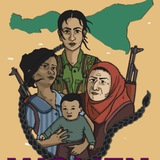
🌺Campaign - Women Defend Rojava🌺
Provide financial support to Heyva Sor a Kurdistane (Kurdistan Red Crescent), the only NGO that has always been on the ground and on the front lines, as it is managed by the Kurdish population of Rojava itself. https://www.heyvasor.org/
You can also support the Weqfa Jina Azad a Sûrî Foundation (Weqfa Free Women of Syria), which works primarily with women and children in the region, promoting health and education for those most in need. https://wjas.org/en/
If you want to learn more about human rights violations during the transitional government’s latest offensive, you can read the report by the Rojava Information Center, a field-based news service that produces all its content in English and has it translated into Spanish here https://rojavaazadimadrid.org/ the-assault-on-northern-syria-violations-committed-during-the-syrian-arab-army-offensive-in-january-2026/
Provide financial support to Heyva Sor a Kurdistane (Kurdistan Red Crescent), the only NGO that has always been on the ground and on the front lines, as it is managed by the Kurdish population of Rojava itself. https://www.heyvasor.org/
You can also support the Weqfa Jina Azad a Sûrî Foundation (Weqfa Free Women of Syria), which works primarily with women and children in the region, promoting health and education for those most in need. https://wjas.org/en/
If you want to learn more about human rights violations during the transitional government’s latest offensive, you can read the report by the Rojava Information Center, a field-based news service that produces all its content in English and has it translated into Spanish here https://rojavaazadimadrid.org/ the-assault-on-northern-syria-violations-committed-during-the-syrian-arab-army-offensive-in-january-2026/
❤1
Dear friends,
We are writing to you from Rojava, the heart of the women’s revolution.
Rojava is a region in northeastern Syria where a socialist-democratic revolution was declared in 2012. The people here organize themselves according to the social and administrative model of Democratic Confederalism. This concept was developed by Abdullah Öcalan, the representative of the freedom movement in Kurdistan.
According to this model, people organize themselves through grassroots democracy in councils, committees, communes, and women’s structures. Following the philosophy of “Jin, Jiyan, Azadî” (“Woman, Life, Freedom”), the liberation of women is considered a central pillar of a democratic society.
Eid al-Adha
All across Rojava, people are currently busy preparing for the Islamic Feast of Sacrifice, Eid al-Adha (ku. Cejna Qurbanê). The holiday lasts four days and commemorates the willingness of the patriarch Abraham to sacrifice one of his sons in order to prove his faith to God. This year, it begins on the evening of May 26.
Homes are being cleaned, sweets are bought for children, pastries are prepared, and final shopping is being done. Everything is being prepared to welcome guests.
The day begins early in the morning with washing, putting on festive clothes, and attending the mosque for the communal morning prayer. After the prayer, the sacrificial animal (usually a sheep, goat, or cow) is slaughtered. Traditionally, the meat is divided into three parts: one for the family itself, one for relatives and neighbors, and one for those in need. The rest of the time is centered around togetherness, community, and visits to neighbors, friends, and family.
In Rojava, many families visit the martyrs’ cemeteries on the first evening to commemorate those who have fallen. Families, friends, and members of the community sit at the graves, light candles or incense, and collectively remember those who died in the fight against ISIS.
The KCK (Koma Civakên Kurdistan, Union of Communities in Kurdistan) has called on society as a whole during Eid al-Adha to strengthen social solidarity, democratic organization, and Kurdish unity.
The KCK stated that the holiday serves as a reminder of resistance against injustice and oppression and should therefore also be linked today with an awareness of social responsibility. “Taking a stand against oppression and denial belongs to the historical memory of this holiday.” The statement calls on people to oppose social division, discrimination, and conflicts between different population and faith groups.
Appointment of the Syrian People’s Council (Parliament)
Throughout Rojava, parties, councils of martyrs’ families, local councils, civil society organizations, and political groups are protesting the actions of the Syrian transitional government in appointing the new Syrian People’s Council, which is intended to function as the new parliament.
The new People’s Council is to consist of 210 members in total. Seventy seats are allocated directly by the transitional government. The elections took place within electoral committees that themselves were formed through appointments. As a result, the members of the People’s Council were not democratically elected. Furthermore, many people in the population were either unaware of the election process or found it lacking transparency.
In a statement issued by 21 parties and organizations, they declared:
“We have already made it clear that we will not participate in this process. This electoral mechanism reflects neither the will of the Kurdish people nor that of the region’s communities and does not constitute a foundation for a genuine democratic political process.
Likewise, the continued use of exceptional laws and special regulations demonstrates this, albeit through new means and mechanisms that attempt to give the political process an appearance of legitimacy, despite lacking legitimacy and public acceptance.”
We are writing to you from Rojava, the heart of the women’s revolution.
Rojava is a region in northeastern Syria where a socialist-democratic revolution was declared in 2012. The people here organize themselves according to the social and administrative model of Democratic Confederalism. This concept was developed by Abdullah Öcalan, the representative of the freedom movement in Kurdistan.
According to this model, people organize themselves through grassroots democracy in councils, committees, communes, and women’s structures. Following the philosophy of “Jin, Jiyan, Azadî” (“Woman, Life, Freedom”), the liberation of women is considered a central pillar of a democratic society.
Eid al-Adha
All across Rojava, people are currently busy preparing for the Islamic Feast of Sacrifice, Eid al-Adha (ku. Cejna Qurbanê). The holiday lasts four days and commemorates the willingness of the patriarch Abraham to sacrifice one of his sons in order to prove his faith to God. This year, it begins on the evening of May 26.
Homes are being cleaned, sweets are bought for children, pastries are prepared, and final shopping is being done. Everything is being prepared to welcome guests.
The day begins early in the morning with washing, putting on festive clothes, and attending the mosque for the communal morning prayer. After the prayer, the sacrificial animal (usually a sheep, goat, or cow) is slaughtered. Traditionally, the meat is divided into three parts: one for the family itself, one for relatives and neighbors, and one for those in need. The rest of the time is centered around togetherness, community, and visits to neighbors, friends, and family.
In Rojava, many families visit the martyrs’ cemeteries on the first evening to commemorate those who have fallen. Families, friends, and members of the community sit at the graves, light candles or incense, and collectively remember those who died in the fight against ISIS.
The KCK (Koma Civakên Kurdistan, Union of Communities in Kurdistan) has called on society as a whole during Eid al-Adha to strengthen social solidarity, democratic organization, and Kurdish unity.
The KCK stated that the holiday serves as a reminder of resistance against injustice and oppression and should therefore also be linked today with an awareness of social responsibility. “Taking a stand against oppression and denial belongs to the historical memory of this holiday.” The statement calls on people to oppose social division, discrimination, and conflicts between different population and faith groups.
Appointment of the Syrian People’s Council (Parliament)
Throughout Rojava, parties, councils of martyrs’ families, local councils, civil society organizations, and political groups are protesting the actions of the Syrian transitional government in appointing the new Syrian People’s Council, which is intended to function as the new parliament.
The new People’s Council is to consist of 210 members in total. Seventy seats are allocated directly by the transitional government. The elections took place within electoral committees that themselves were formed through appointments. As a result, the members of the People’s Council were not democratically elected. Furthermore, many people in the population were either unaware of the election process or found it lacking transparency.
In a statement issued by 21 parties and organizations, they declared:
“We have already made it clear that we will not participate in this process. This electoral mechanism reflects neither the will of the Kurdish people nor that of the region’s communities and does not constitute a foundation for a genuine democratic political process.
Likewise, the continued use of exceptional laws and special regulations demonstrates this, albeit through new means and mechanisms that attempt to give the political process an appearance of legitimacy, despite lacking legitimacy and public acceptance.”
❤1
They also criticize the appointment of individuals to the electoral committees, as well as the appointment of the representative of the Serêkaniyê region.
What has happened once again reveals a strategy of exclusion and marginalization, implemented through the selective appointment of only a few individuals. This contradicts the most fundamental principles of democracy, justice, and genuine national partnership.
In Hesekê, the results of this process show that Christian communities are no longer represented, which significantly affects the political and demographic diversity of the region.
The Armenian Unity Party has also failed to gain a seat in the People’s Council. This represents a further weakening of political representation in Syria.
Street Renaming in Homs
Activist Hanin Khalifa emphasized that throughout its long history, Syria has always been known as an open space for all cultures and religions. However, the current government is attempting to impose a monolithic and exclusionary vision, whether through school curricula or through the renaming of streets and public symbols.
She explained that the repeated changes to street names and historical landmarks are not merely administrative decisions but carry political and ideological messages aimed at establishing a rigid religious discourse.
The renaming of a street that once bore the name of Sultan Pasha al-Atrash — one of the most important leaders of the Great Syrian Revolution against French colonialism — is, according to Hanin Khalifa, an attempt to erase Druze history.
“The proposed constitution reinforces exclusion and marginalization,” she said, adding that any political project not based on national partnership and respect for pluralism is incapable of creating genuine stability in the country.
Renaming of Schools Rejected
Last week, the transitional government sent lists of new school names to the local education committee in Qamişlo.
Schools in Rojava are named after martyrs who fought against ISIS, preserving their memory and honoring them by carrying forward their courage and ideas.
The “Şehîd Diyar” school is set to be renamed “Esed El-Dîn Şêrko.” For the “Şehîd Ferhad Kat” school, the former name “Hitin” was once again proposed — a name already used during Baath Party rule.
The education committee, students, and teachers strongly reject these proposals and have sent a response to Damascus.
Across northern Syria, protests against the renaming of educational institutions imposed by the leadership in Damascus are becoming increasingly common.
Meeting of 2,000 Kurdish and Arab Women in Kobanê
In mid-May, 2,000 women gathered in Kobanê under the slogan: “With the will of free women, we will build a democratic Syria.” Kurdish and Arab women spent an entire day discussing political participation, legal guarantees for their achievements, and their role in Syria’s future political order.
Participants included women from civil society, Mothers of Peace, members of women’s organizations, relatives of martyrs, and fighters from the YPJ.
One of the most widely discussed topics was the legal protection of the many achievements of the women’s movement in North and East Syria within Syria’s new constitution. Among other demands, participants called for the YPJ to be officially recognized as a legitimate force for the protection of society.
In speeches and discussions, the participants repeatedly emphasized the importance of women’s political participation in all decision-making structures in Syria. “In the new Syrian order, women must not once again be pushed to the margins,” said Ilham Ehmed, co-head of foreign affairs of the Autonomous Administration of North and East Syria.
The meeting was also highly significant because Kurdish and Arab women jointly discussed future perspectives. In doing so, they actively opposed the division between Arab and Kurdish society promoted by the transitional government.
Sixth Return Convoy Heads to Afrin
Last week, another convoy of displaced families departed from Qamişlo and Dêrik toward Afrin.
What has happened once again reveals a strategy of exclusion and marginalization, implemented through the selective appointment of only a few individuals. This contradicts the most fundamental principles of democracy, justice, and genuine national partnership.
In Hesekê, the results of this process show that Christian communities are no longer represented, which significantly affects the political and demographic diversity of the region.
The Armenian Unity Party has also failed to gain a seat in the People’s Council. This represents a further weakening of political representation in Syria.
Street Renaming in Homs
Activist Hanin Khalifa emphasized that throughout its long history, Syria has always been known as an open space for all cultures and religions. However, the current government is attempting to impose a monolithic and exclusionary vision, whether through school curricula or through the renaming of streets and public symbols.
She explained that the repeated changes to street names and historical landmarks are not merely administrative decisions but carry political and ideological messages aimed at establishing a rigid religious discourse.
The renaming of a street that once bore the name of Sultan Pasha al-Atrash — one of the most important leaders of the Great Syrian Revolution against French colonialism — is, according to Hanin Khalifa, an attempt to erase Druze history.
“The proposed constitution reinforces exclusion and marginalization,” she said, adding that any political project not based on national partnership and respect for pluralism is incapable of creating genuine stability in the country.
Renaming of Schools Rejected
Last week, the transitional government sent lists of new school names to the local education committee in Qamişlo.
Schools in Rojava are named after martyrs who fought against ISIS, preserving their memory and honoring them by carrying forward their courage and ideas.
The “Şehîd Diyar” school is set to be renamed “Esed El-Dîn Şêrko.” For the “Şehîd Ferhad Kat” school, the former name “Hitin” was once again proposed — a name already used during Baath Party rule.
The education committee, students, and teachers strongly reject these proposals and have sent a response to Damascus.
Across northern Syria, protests against the renaming of educational institutions imposed by the leadership in Damascus are becoming increasingly common.
Meeting of 2,000 Kurdish and Arab Women in Kobanê
In mid-May, 2,000 women gathered in Kobanê under the slogan: “With the will of free women, we will build a democratic Syria.” Kurdish and Arab women spent an entire day discussing political participation, legal guarantees for their achievements, and their role in Syria’s future political order.
Participants included women from civil society, Mothers of Peace, members of women’s organizations, relatives of martyrs, and fighters from the YPJ.
One of the most widely discussed topics was the legal protection of the many achievements of the women’s movement in North and East Syria within Syria’s new constitution. Among other demands, participants called for the YPJ to be officially recognized as a legitimate force for the protection of society.
In speeches and discussions, the participants repeatedly emphasized the importance of women’s political participation in all decision-making structures in Syria. “In the new Syrian order, women must not once again be pushed to the margins,” said Ilham Ehmed, co-head of foreign affairs of the Autonomous Administration of North and East Syria.
The meeting was also highly significant because Kurdish and Arab women jointly discussed future perspectives. In doing so, they actively opposed the division between Arab and Kurdish society promoted by the transitional government.
Sixth Return Convoy Heads to Afrin
Last week, another convoy of displaced families departed from Qamişlo and Dêrik toward Afrin.
❤1
This time, around 1,000 families — many of whom had gathered the evening before — assembled with their belongings on the outskirts of the two cities in order to return to their homeland together early the next morning.
This is now the sixth return convoy since the right of return was agreed upon in the ceasefire agreement of January 29 between the transitional government and the Autonomous Administration.
When the first group returned in March of this year, emotional images spread around the world as displaced families were able to set foot in Afrin once again for the first time.
The families had fled Afrin in 2018, when Turkey and allied jihadist militias occupied the city and region. Since then, the Turkish occupying power has pursued not only a classic colonial policy but also a policy of ethnic cleansing. More than 400,000 people were displaced from their villages and from the city of Afrin.
Since then, due to the ongoing war in North and East Syria, the families have repeatedly been forced to flee again. Many have lived in up to six different cities during their displacement, often in refugee camps or makeshift shelters in schools.
Further convoys are planned, as far from all displaced people have been able to return so far. Displaced people from Serêkaniyê, which was occupied by Turkey in 2019, are also still waiting for their return. Negotiations on this issue continue between the Autonomous Administration and the transitional government.
With that, we send you revolutionary greetings from Rojava.
This is now the sixth return convoy since the right of return was agreed upon in the ceasefire agreement of January 29 between the transitional government and the Autonomous Administration.
When the first group returned in March of this year, emotional images spread around the world as displaced families were able to set foot in Afrin once again for the first time.
The families had fled Afrin in 2018, when Turkey and allied jihadist militias occupied the city and region. Since then, the Turkish occupying power has pursued not only a classic colonial policy but also a policy of ethnic cleansing. More than 400,000 people were displaced from their villages and from the city of Afrin.
Since then, due to the ongoing war in North and East Syria, the families have repeatedly been forced to flee again. Many have lived in up to six different cities during their displacement, often in refugee camps or makeshift shelters in schools.
Further convoys are planned, as far from all displaced people have been able to return so far. Displaced people from Serêkaniyê, which was occupied by Turkey in 2019, are also still waiting for their return. Negotiations on this issue continue between the Autonomous Administration and the transitional government.
With that, we send you revolutionary greetings from Rojava.
❤1
🌺Campaign - Women Defend Rojava🌺
The Women Defend Rojava campaign has come to an end! We have been able to gain a deeper understanding of how women organise in Rojava and all the progress they have made in recent years regarding their rights and freedoms.
The Women’s Revolution in Rojava is currently in a fragile state, but the spark that was ignited over a decade ago can no longer be extinguished. Women have fought to make a dignified and just life a reality for themselves and their families, and they are clear that they will not take a single step backwards.
From here, we have an internationalist responsibility to stay informed, to spread the news from there and to support them in their demands, which, after all, are also our own. Long live the resistance of the women of Rojava!
The Women Defend Rojava campaign has come to an end! We have been able to gain a deeper understanding of how women organise in Rojava and all the progress they have made in recent years regarding their rights and freedoms.
The Women’s Revolution in Rojava is currently in a fragile state, but the spark that was ignited over a decade ago can no longer be extinguished. Women have fought to make a dignified and just life a reality for themselves and their families, and they are clear that they will not take a single step backwards.
From here, we have an internationalist responsibility to stay informed, to spread the news from there and to support them in their demands, which, after all, are also our own. Long live the resistance of the women of Rojava!
❤1
Forwarded from HashtagsJin
Media is too big
VIEW IN TELEGRAM
❤️🔥Global action day in Rojava❤️🔥
Today, thousands of people from Qmishlo are taking to the streets. As part of the global day of action in defense of the YPJ and women’s rights, people are demonstrating for a free and democratic life.
Rojihlat Afrin addresses society with strong words.
We are all YPG - Jin Jiyan Azadi!!!
Today, thousands of people from Qmishlo are taking to the streets. As part of the global day of action in defense of the YPJ and women’s rights, people are demonstrating for a free and democratic life.
Rojihlat Afrin addresses society with strong words.
We are all YPG - Jin Jiyan Azadi!!!
❤1
Forwarded from Messages from Rojava (Women Defend Rojava)
Art and Culture as a Form of Self-Defense in Rojava
🌺 Across Rojava, actions and demonstrations are calling for the recognition of the Women’s Protection Units (YPJ) and their integration into the Syrian armed forces.
🌺 But what is the connection between self-defense, art and culture? The women’s cultural movement Hîlala Zêrîn is organizing theater, music, and art events in support of the YPJ.
🌺 Mizgîn Çolaq and Şêrîn Reşîd from Hîlala Zêrîn discuss the link between self-defense, art, and culture.
🌺Read more here: https://womendefendrojava.net/en/2026/05/31/art-and-culture-as-a-form-of-self-defense-in-rojava/
🌺 Across Rojava, actions and demonstrations are calling for the recognition of the Women’s Protection Units (YPJ) and their integration into the Syrian armed forces.
🌺 But what is the connection between self-defense, art and culture? The women’s cultural movement Hîlala Zêrîn is organizing theater, music, and art events in support of the YPJ.
🌺 Mizgîn Çolaq and Şêrîn Reşîd from Hîlala Zêrîn discuss the link between self-defense, art, and culture.
🌺Read more here: https://womendefendrojava.net/en/2026/05/31/art-and-culture-as-a-form-of-self-defense-in-rojava/
❤1