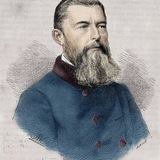
A being's talent, power, wealth, adornment make it what it is. How can it see its existence as nonexistence, wealth as poverty, talent as incapacity? If plants could see, taste, and judge, each would call its flower the most beautiful. Its comprehension and taste reach no further than its production power. What the productive power of its nature has brought forth as the highest, that must also its taste, its judgment, recognise and affirm as the highest.
What the nature affirms, the understanding, the taste, the judgment, cannot deny; otherwise the understanding, the judgment, would no longer be the understanding and judgment of this particular being, but of some other. The measure of the nature is also the measure of the understanding. If the nature is limited, so also is the feeling, so also is the understanding. But to a limited being its limited understanding is not felt to be a limitation; on the contrary, it is perfectly happy and contented with this understanding; it regards it, praises and values it, as a glorious, divine power; and the limited understanding, on its part, values the limited nature whose understanding it is.
And the understanding values the limited nature it belongs to. Each is exactly adapted to the other; how should they be at issue with each other? Perfectly adapted, how could they conflict?
A being’s understanding is its sphere of vision. As far as thou seest, so far extends thy nature; and conversely. Being' nature extends as far as you see, and vice versa. The eye of the brute reaches no farther than its needs, and its nature no farther than its needs. And so far as thy nature reaches, so far reaches thy unlimited self-consciousness, so far art thou God.
As far as your nature goes, so goes your unlimited self-consciousness - your godhood.
The discrepancy between the understanding and the nature, between the power of conception and the power of production in the human consciousness, on the one hand, is merely of individual significance and has not a universal application, the discrepancy between human understanding and nature is just individual, not universal; and, on the other hand, it is only apparent. He who, having written a bad poem, knows it to be bad, is in his intelligence, and therefore in his nature, not so limited as he who, having written a bad poem, admires it and thinks it good.
Ludwig Feuerbach
A being's talent, power, wealth, adornment make it what it is. How can it see its existence as nonexistence, wealth as poverty, talent as incapacity? If plants could see, taste, and judge, each would call its flower the most beautiful. Its comprehension and…
This passage is talking about how a being sees itself and its talents. It says that the things that make a being special, like its talents, power, wealth, and appearance, make it who it is. It wonders how a being can see itself as not special, its wealth as poverty, or its talents as weaknesses.
It compares this idea with plants. If plants could see, taste, and judge, each plant would think its own flower is the most beautiful. It says that plants can only judge based on what they can do. So, whatever the plant's nature brought forth as the best, its judgment and taste would also recognize and affirm as the best.
It says that what a being's nature affirms, its understanding, taste, and judgment cannot deny. Otherwise, it wouldn't be the understanding and judgment of that specific being, but of some other being. The nature also limits the understanding. But a being with limited understanding doesn't feel limited; it's happy with its understanding and thinks it's great. And the limited understanding values the limited nature it belongs to. They are perfectly adapted and don't conflict.
The passage also says that a being's understanding is its vision. As far as a being can see and understand, that's how far its nature goes. And vice versa, the nature of a being goes as far as its understanding. It says that for animals, their vision and nature are limited to what they need. And as far as a being's nature extends, so does its self-consciousness, which means feeling aware of oneself. It says that as far as a being's nature goes, that's how far its unlimited self-consciousness goes, and it considers that to be like being God.
It mentions that the difference between understanding and nature, like the ability to imagine and the ability to create in human consciousness, is only individual and not universal. It's saying that if someone knows they wrote a bad poem and admits it, their understanding isn't as limited as someone who wrote a bad poem but thinks it's good.
If thou think the infinite, you perceive and affirm thought's infinite power; if thou feelest the infinite, thou feelest and affirmest the infinitude of the power of feeling. The object of the intellect is intellect objective to itself; If thou hast no sensibility, no feeling for music, thou perceivest in the finest music nothing more than in the wind that whistles by thy ear, or than in the brook which rushes past thy feet. Without musical sensibility, the finest music is just wind or a brook to you.
What, then, is it which acts on thee when thou art affected by melody? What then acts on you when melody affects you?
What does thou perceive in it? What else than the voice of thy own heart? Feeling speaks only to feeling; feeling is comprehensible only by feeling, that is, by itself—for this reason, that the object of feeling is nothing else than feeling. Feeling is comprehensible only to feeling itself, because its object is feeling.
Music is a monologue of emotion. But the dialogue of philosophy also is in truth only a monologue of the intellect; thought speaks only to thought. The splendours of the crystal charm the sense, but the intellect is interested only in the laws of crystallisation. The intellectual only is the object of the intellect. All therefore which, in the point of view of metaphysical, transcendental speculation and religion, has the significance only of the secondary, the subjective, the medium, the organ—has in truth the significance of the primary, of the essence, of the object itself. If, for example, feeling is the essential organ of religion, the nature of God is nothing else than an expression of the nature of feeling.
The true but latent sense of the phrase, “Feeling is the organ of the divine,” is, feeling is the noblest, the most excellent, i.e., the divine, in man. How couldst thou perceive the divine by feeling, if feeling were not itself divine in its nature? How could you perceive the divine through feeling if feeling itself weren't divine in nature?
The divine assuredly is known only by means of the divine—God is known only by himself. The divine is known only by the divine - God only by himself. The divine nature which is discerned by feeling is in truth nothing else than feeling enraptured, in ecstasy with itself—feeling intoxicated with joy, blissful in its own plenitude. The divine nature discerned by feeling is really just feeling enraptured, ecstatic, intoxicated and joyful in its own fullness.
It is already clear from this that where feeling is held to be the organ of the infinite, the subjective essence of religion,—the external data of religion lose their objective value. Feuerbach argues that when feeling is seen as the essential organ of the infinite or divine in religion, the objective doctrines and data of religion lose their importance.
Where feeling is seen as religion's subjective essence, religion's external data loses objective value. And thus, since feeling has been held the cardinal principle in religion, the doctrines of Christianity, formerly so sacred, have lost their importance. Since feeling has been considered the core principle of religion, the doctrines of Christianity that were once sacred have lost their significance.
If, from this point of view, some value is still conceded to Christian ideas, it is a value springing entirely from the relation they bear to feeling, If Christian ideas still have value here, it comes solely from relating to feeling; if another object would excite the same emotions, it would be just as welcome. If Christian ideas still have any value from this viewpoint, it is only in relation to feeling - if another object could elicit the same feelings, it would be equally valid or welcomed.
But the object of religious feeling is become a matter of indifference, only because when once feeling has been pronounced to be the subjective essence of religion, it in fact is also the objective essence of religion, though it may not be declared, at least directly, to be such.
I say directly; for indirectly this is certainly admitted, when it is declared that feeling, as such, is religious, and thus the distinction between specifically religious and irreligious, or at least non-religious, feelings is abolished—a necessary consequence of the point of view in which feeling only is regarded as the organ of the divine. Although not directly stated, it is indirectly admitted by abolishing the distinction between specifically religious and non-religious feelings. For on what other ground than that of its essence, its nature, dost thou hold feeling to be the organ of the infinite, the divine being? And is not the nature of feeling in general also the nature of every special feeling, be its object what it may? Feuerbach argues this is a necessary consequence of making feeling the religious organ - the nature of feeling in general is seen as the nature of every specific feeling.
What, then, makes this feeling religious? A given object? Not at all; for this object is itself a religious one only when it is not an object of the cold understanding or memory, but of feeling. What makes feeling religious then? Not its object - the object is only religious when felt, not understood. Thus, what makes a feeling religious? Not any particular object, since the object is only religious when perceived through feeling rather than intellect.
What then? The nature of feeling—a nature of which every special feeling, without distinction of objects, partakes.
Rather, feeling's nature - shared by every feeling regardless of object.
Thus, feeling is pronounced to be religious, simply because it is feeling and it is called religious simply for being feeling. Its religiousness grounds lie in its own nature or essence. But is not feeling thereby declared to be itself the absolute, the divine?
If feeling in itself is good, religious, i.e., holy, divine, has not feeling its God in itself? If feeling is inherently good and religious, does it not have God in itself?
If you assert that there is an object of feeling, but want to express your feeling truly without adding anything external through reflection, all you can do is distinguish between your individual feeling and the general nature of feeling.
You need to separate the universal aspect im feeling from the disturbing, corrupting influences that are tied up with feeling in yourself, under your individual circumstances. Therefore, what you can contemplate alone, declare as infinite, and define as its essence, is simply the nature of feeling.
You thus have no other definition of God than this: God is pure, unlimited, free Feeling. Any other God you assume is a God imposed on your feeling from outside. Feeling is atheistic in the sense of orthodox belief, which connects religion to an external object; feeling denies an objective God - feeling itself is God. In this perspective, only the denial or negation of feeling is the denial or negation of God. You are simply too cowardly or narrow-minded to confess in words what your feeling affirms silently. Bound by external considerations, still enslaved to crude empiricism, unable to understand the spiritual grandeur of feeling, you are terrified by the religious atheism of your heart. Through this fear you destroy the unity of your feeling with itself by imagining an objective being distinct from your feeling, thus necessarily falling back into old questions and doubts - is there a God or not? Questions and doubts which disappear, indeed are impossible, when feeling is defined as the essence of religion.
Feeling is your own inner power, but simultaneously a power distinct from you and independent of you; it is in you, above you; it itself constitutes the objective in you - your own being which impresses you as another being; in short, your God.
How then will you distinguish another objective being from this objective being within you? How will you get beyond your feeling?
👍1
But feeling has been brought up here only as an example. It is the same with every other power, faculty, potentiality, reality, activity - the name is unimportant - which is defined as the essential organ of any object. Whatever is a subjective expression of a nature is at the same time also its objective expression. Man cannot get beyond his true nature. He may through imagination conceive of individuals of another so-called higher kind, but he can never break free from his species, his nature; the conditions of being, the positive ultimate predicates which he assigns to these other individuals, are always determinations or qualities drawn from his own nature - qualities in which he in truth only images and projects himself.
There may certainly be thinking beings besides humans on other planets in our solar system. But by supposing such beings we do not change our standpoint - we extend our conceptions quantitatively, not qualitatively. For as surely as the other planets have the same laws of motion, so surely are there the same laws of perception and thought as here.
Indeed, we populate the other planets, not to place different beings than ourselves there, but rather more beings of our own or a similar nature.
Ludwig Feuerbach
2 ) The Essence of Religion Considered Generally :
What we have been arguing generally so far, even concerning sense impressions, about the relationship between subject and object, applies especially to the relationship between the subject and the religious object. In sense perceptions, consciousness of the object is distinguishable from self-consciousness; but in religion, consciousness of the object and self-consciousness coincide. The object of the senses is outside of man, the religious object is within him, and therefore abandons him as little as his self-consciousness or conscience; it is the intimate, closest object.
As Augustine says, "God is nearer, more related to us, and therefore more easily known by us, than sensible, corporeal things." The object of the senses is in itself indifferent - independent of disposition or judgment; but the religious object is a selected object; the most excellent, supreme being; it essentially presupposes critical judgment, discrimination between the divine and nondivine, between what is worthy of adoration and what is not.
And here, without any limitation, this proposition can be applied: The object of any subject is nothing other than the subject's own nature taken objectively. A man's thoughts and dispositions are his God; a man's worth is his God's worth, no more.
Consciousness of God is self-consciousness, knowledge of God is self-knowledge. By his God thou knowest the man, and by the man his God; the two are identical. Whatever God is to a man, that is his heart and soul; and conversely, God is the manifested inward nature, the expressed self of a man - religion is the solemn unveiling of a man's hidden treasures, the revelation of intimate thoughts, the open confession of love secrets.
❤2
But when religion - consciousness of God - is referred to as the self-consciousness of man, this should not be taken to mean that the religious man is directly aware of this identity. On the contrary, ignorance of it is fundamental to the peculiar nature of religion. To avoid this misconception, it is better to say that religion is man's earliest and also indirect form of self-knowledge. Thus, religion everywhere precedes philosophy, in the history of mankind and of the individual. Man first sees his nature as if outside himself, before finding it in himself. His own nature is at first contemplated by him as that of another being.
Religion is the childlike condition of humanity; but the child sees his nature - man - outside himself; in childhood, man is an object to himself in the form of another man. Thus the historical progress of religion consists in this: what was regarded as objective by an earlier religion is now recognized as subjective; that is, what was formerly contemplated and worshipped as God is now perceived as something human. What was first religion becomes later idolatry; man is seen to have adored his own nature. Man has made himself objective but not recognized the object as his own nature: a later religion takes this forward step; every advance in religion is thus deeper self-knowledge.
But every particular religion, while calling its predecessors idolatrous, excepts itself - necessarily so, or it would not be religion - from the fate, the common nature of all religions: it attributes only to other religions what is the fault, if fault it is, of religion in general. All religions accuse previous religions of idolatry, but they themselves exempt themselves from this accusation. This is necessary for the religion to exist, because if it admitted to idolatry, it would no longer be a religion. However, this means that all religions are essentially the same, and that they all share the same faults. Religion in general is at fault, not just specific religions.
Because it has a different object and tenor, because it has transcended preceding religions' ideas, it wrongly thinks itself above the necessary eternal laws constituting religion's essence - it imagines or idealizes its object and ideas as superhuman. But religion's essence, hidden from the religious, is evident to the thinker, who views religion objectively, unlike its adherents.
And Our task is to show the antithesis of divine and human is entirely illusory, nothing but the antithesis between human nature generally and the individual; thus, Christianity's object and content are entirely human. Religion, at least Christianity, is man's relation to himself, or more precisely, to his own nature (his subjective nature) - a relation to it, viewed as a nature apart from his own. The divine being is nothing but the human being, or rather, human nature purified, freed from individual limits, made objective - that is, contemplated and revered as another, distinct being.
Thus, all attributes of the divine nature are attributes of human nature.
In relation to the attributes, the predicates, of the Divine Being, this is admitted without hesitation, but by no means in relation to the subject of these predicates. Feuerbach is arguing that to admit that the attributes of God, such as love, wisdom, and power, are human projections. However, they are not willing to admit that the subject of these predicates, God himself, is also a human projection.
The negation of the subject is held to be irreligion, even atheism; though not so the negation of the predicates? But that which has no predicates or qualities has no effect on me; that which has no effect on me has no existence for me. To deny all the qualities of a being is equivalent to denying the being himself. A being without qualities cannot become an object to the mind, and such a being is virtually non-existent. Where man deprives God of all qualities, God is no longer anything more to him than a negative being. To the truly religious man, God is not a being without qualities, because to him God is a positive, real being. The theory that God cannot be defined, and consequently cannot be known by man, is thus the offspring of recent times, a product of modern unbelief. As reason is and can be called finite only where man regards sensual enjoyment, religious emotion, aesthetic contemplation or moral sentiment as absolute, true; so the proposition that God is unknowable or undefinable can only be stated and fixed as dogma where this object no longer holds intellectual interest; where the real, positive alone has hold on man, alone has essential, absolute divine significance, but where simultaneously, contradicting this worldly tendency, some old religiousness remains. Feuerbach is arguing that the proposition that God is unknowable or undefinable is a sign of the decline of religion. It is a proposition that can only arise in a society where people are no longer interested in religion, but where there are still some old remains of religiousness and this is fixed and dogmatic and itself a religious way of thinking.
On the ground that God is unknowable, man excuses himself to what is yet remaining of his religious conscience for his forgetfulness of God, his absorption in the world: he denies God practically by his conduct,—the world has possession of all his thoughts and inclinations,—but he does not deny him theoretically, he does not attack his existence; he lets that rest. In other words, people who claim that God is unknowable are often using this claim as a way to justify their own lack of religious commitment. Feuerbach argues that these people are essentially denying God "practically by his conduct," even though they may not be denying God's existence theoretically.
But this existence does not affect or inconvenience him; it is a merely negative existence, an existence without existence, self-contradictory - its effects indistinguishable from nonbeing. (Point to be noticed here that for Feuerbach the "Nothingness" and "Non-being" are the same, the fixation, opposite of the "being".) The denial of determinate, positive predicates concerning the divine nature is nothing else than a denial of religion, with, however, an appearance of religion in its favour, so that it is not recognised as a denial; it is simply a subtle, disguised atheism. The alleged religious horror of limiting God by positive predicates is only the irreligious wish to know nothing more of God, to banish God from the mind.
Dread of limitation is dread of existence. All real existence, i.e., all existence which is truly such, is qualitative, determinative existence.
He who earnestly believes in the Divine existence is not shocked at the attributing even of gross sensuous qualities to God. He who dreads an existence that may give offence, who shrinks from the grossness of a positive predicate, may as well renounce existence altogether. Feuerbach is arguing that people who believe in God should not be shocked by the attribution of even human like gross sensuous qualities to God.
This is because God is simply a reflection of human nature, and humans are capable of both good and evil. For example, Feuerbach argues that the Christian God is a projection of human love and compassion. However, he also argues that the Christian God is a projection of human anger and vengeance. This is why the Christian God is often characterized as both a loving father and a wrathful judge.
A God who is injured by determinate qualities has not the courage and the strength to exist. Qualities are the fire, the vital breath, the oxygen, the salt of existence. Feuerbach criticizes the idea of a God who is so perfect and unchanging that he is somehow detached from the world and its qualities. This kind of God would be so fragile and delicate that even the slightest contact with the world would harm him. Feuerbach is also saying that qualities are essential for existence. He compares them to fire, vital breath, oxygen, and salt. These things are that is necessary for life. Without them, nothing could live.
An existence in general, an existence without qualities, is an insipidity, an absurdity. But there can be no more in God than is supplied by religion. Only where man loses his taste for religion, and thus religion itself becomes insipid, does the existence of God become an insipid existence—an existence without qualities. Feuerbach argues that existence without qualities is absurd and that religion supplies all the qualities that God has. Therefore, if people lose their taste for religion, the existence of God becomes absurd as well. God is a product of human imagination and without religion, God won't be in existence.
However, there is an even milder way of denying the divine predicates than the direct denial just described. It is admitted that the predicates of divine nature are finite, specifically human qualities, but their rejection is rejected; they are even protected, because man needs a definite conception of God, and since man can only form a human conception. In relation to God, it is said, these predicates are certainly without objective validity; but to me, if God is to exist for me, he can only appear as he does, as a being with human-like attributes. But this distinction between what God is in himself and what he is for me destroys religious peace, and is an unfounded, untenable distinction. I cannot know if God is something else in or for himself than for me; what he is to me is all he is to me. For me, the predicates under which he exists contain his nature; he is for me what he alone can ever be. The religious man is satisfied with God's relation to himself; he knows no other, for God is what God alone can be to man.
In the distinction above stated, man takes a point of view above himself, i.e., above his nature, the absolute measure of his being; but this transcendentalism is only an illusion; for I can make the distinction between the object as it is in itself, and the object as it is for me, only where an object can really appear otherwise to me, not where it appears to me such as the absolute measure of my nature determines it to appear—such as it must appear to me. In that distinction, man transcendentally views above his nature, the measure of his being - but that's illusory. I can only distinguish the object as it is in itself and for me where it can appear differently to me, not as my nature determines - as it must appear.
It is true that I may have a merely subjective conception, i.e., one which does not arise out of the general constitution of my species; but if my conception is determined by the constitution of my species, the distinction between what an object is in itself, and what it is for me ceases; for this conception is itself an absolute one. I may have a merely subjective conception - but if my conception is determined by my species' constitution, there is no distinction between what the object is in itself and what it is for me; for this conception is absolute.
The measure of the species is the absolute measure, law, and criterion of man. And, indeed, religion has the conviction that its conceptions, its predicates of God, are such as every man ought to have, and must have, if he would have the true ones—that they are the conceptions necessary to human nature, nay, further, that they are objectively true, representing God as he is. The species' measure is man's absolute measure, law and criterion. Religion is convinced its conceptions of God are what every man should and must have for truth, that they are necessary to human nature, indeed objectively true, representing God as he is.
To every religion the gods of other religions are only notions concerning God, but its own conception of God is to it God himself, the true God—God such as he is in himself. To every religion, other gods are only notions, but its own God is the true God - God as he is in himself. Religion wants complete Deity, God without reservation, not a mere phantasm but God himself. If religion gives up God's nature it gives up existence, truth, possessing the true God. Scepticism is religion's arch-enemy; but the distinction between object and conception, God as he is in himself and God as he is for me, is a sceptical, irreligious distinction.
That which is to man the self-existent, the highest being, to which he can conceive nothing higher—that is to him the Divine Being. This means that what a person considers to be the highest, most perfect being, beyond which nothing greater can be conceived, is what they consider divine.
How then should he inquire concerning this being, what he is in himself? If God were an object to the bird, he would be a winged being: the bird knows nothing higher, nothing more blissful, than the winged condition. Feuerbach argues that we cannot really know the true nature of God in himself, detached from how he appears to us. He gives the example that if birds had a conception of God, he would appear winged to them, since they know nothing higher than having wings.
How ludicrous would it be if this bird pronounced: To me God appears as a bird, but what he is in himself I know not. To the bird the highest nature is the bird-nature; take from him the conception of this, and you take from him the conception of the highest being. It would be absurd, Feuerbach says, for the bird to say it knows God appears as a bird but does not know God's true nature. For the bird, the highest nature is being winged, so it cannot separate its idea of the divine from wingedness.
How, then, could he ask whether God in himself were winged? To ask whether God is in himself what he is for me, is to ask whether God is God, is to lift oneself above one’s God, to rise up against him. Just as it would be nonsensical for a bird to ask if God is really winged, Feuerbach argues it is absurd for humans to ask if God is truly as he appears to us. To do so would be to set ourselves above God.
Wherever, therefore, this idea, that the religious predicates are only anthropomorphisms, has taken possession of a man, there has doubt, has unbelief, obtained the mastery of faith. Feuerbach states that if someone believes that attributes we apply to God are just anthropomorphisms (projections of human qualities), then doubt and unbelief have taken hold over faith.
And it is only the inconsequence of faint-heartedness and intellectual imbecility which does not proceed from this idea to the formal negation of the predicates, and from thence to the negation of the subject to which they relate. He argues that if someone realizes religious attributes are anthropomorphic but does not also reject those attributes and the idea of God itself, it is due to lack of courage and foolishness.
If thou doubtest the objective truth of the predicates, thou must also doubt the objective truth of the subject whose predicates they are. If thy predicates are anthropomorphisms, the subject of them is an anthropomorphism too. Feuerbach states that if you doubt the truth of attributes applied to God, you must also doubt God himself, since if the attributes are human projections, so too must be the idea of God.
If love, goodness, personality, &c., are human attributes, so also is the subject which thou presupposest, the existence of God, the belief that there is a God, an anthropomorphism—a presupposition purely human. If qualities like love and goodness are human constructs, then the idea of God as a being with those qualities is also a human construction.
Whence knowest thou that the belief in a God at all is not a limitation of man’s mode of conception? Higher beings—and thou supposest such—are perhaps so blest in themselves, so at unity with themselves, that they are not hung in suspense between themselves and a yet higher being. Feuerbach questions how we can know that the belief in God itself is not just a limitation of human thinking. He suggests advanced beings may not need to conceive of a higher being at all.
To know God and not oneself to be God, to know blessedness and not oneself to enjoy it, is a state of disunity, of unhappiness. Higher beings know nothing of this unhappiness; they have no conception of that which they are not. He argues that to believe in a God separate from oneself is a state of disunity for humans.
But higher beings feel no such unhappiness, as they do not conceive of anything outside themselves.
❤1🔥1
You believe God is loving because you yourself love. You believe God is wise and good because you see wisdom and goodness as the best human qualities. You believe God exists as a conscious being, a subject because you yourself have existence as a conscious human subject. For you, the highest good is to love, be wise, and exist as a conscious being. You can't conceive of any greater happiness than existing as a conscious subject. God's existence as a subject is due to the same reason that He is wise, blessed and personal - because you project your own attributes onto God.
The distinction between the divine predicates and the divine subject is only this, that to thee the subject, the existence, does not appear an anthropomorphism, because the conception of it is necessarily involved in thy own existence as a subject, whereas the predicates do appear anthropomorphisms, because their necessity—the necessity that God should be conscious, wise, good, &c.,—is not an immediate necessity, identical with the being of man, but is evolved by his self-consciousness, by the activity of his thought.
The only difference is that God's existence doesn't seem anthropomorphic since your own existence as a subject is a given. But the specific attributes or God's predicates do seem anthropomorphic since they are conceived by human self-reflection. The distinction lies in how humans perceive God's existence vs. attributes. Existence as a subject does not seem like an anthropomorphism (human projection) because the idea of existing as a subject is innate to humans' own self-awareness. However, specific attributes like consciousness, wisdom and goodness do seem like anthropomorphisms. This is because their "necessity" - that God must possess them - is not immediately obvious just from the fact of existing as a subject. Rather, it emerges from human self-reflection and thinking about what qualities best represent perfection. In other words, existence feels inherent to subjecthood, but particular qualities feel projected from human ideals. That is the nature of the distinction between how humans conceive of God's subjectness vs. God's characteristics.
I am a subject, I exist, whether I be wise or unwise, good or bad. To exist is to man the first datum; it constitutes the very idea of the subject; it is presupposed by the predicates. Hence man relinquishes the predicates, but the existence of God is to him a settled, irrefarigable, absolutely certain, objective truth. You necessarily exist as a subject prior to any attributes. So you don't doubt God's existence as subject, though you may doubt the particular attributes.
But, nevertheless, this distinction is merely an apparent one. The necessity of the subject lies only in the necessity of the predicate. Thou art a subject only in so far as thou art a human subject; the certainty and reality of thy existence lie only in the certainty and reality of thy human attributes. But this is an illusory distinction. God's existence as subject is only necessary because you conceive of Him having divine predicates. Likewise, your existence is certain only because you have human attributes.
What the subject is lies only in the predicate; the predicate is the truth of the subject—the subject only the personified, existing predicate, the predicate conceived as existing. Subject and predicate are distinguished only as existence and essence. The subject is defined by its predicates. The predicates express the essence of the subject. Subject and predicate differ only in that the subject exists.
The negation of the predicates is therefore the negation of the subject. What remains of the human subject when abstracted from the human attributes? Even in the language of common life the divine predicates—Providence, Omniscience, Omnipotence—are put for the divine subject. So negating the predicates negates the subject. We refer to God's attributes to refer to God Himself.
The certainty of the existence of God, of which it has been said that it is as certain, nay, more certain to man than his own existence, depends only on the certainty of the qualities of God—it is in itself no immediate certainty. God's existence is not immediately certain, but depends on the certainty of His conceived divine qualities.
To the Christian the existence of the Christian God only is a certainty; to the heathen that of the heathen God only. The heathen did not doubt the existence of Jupiter, because he took no offence at the nature of Jupiter, because he could conceive of God under no other qualities, because to him these qualities were a certainty, a divine reality. Different believers are certain of their particular conception of God based on those attributes. Heathens did not doubt Jupiter because his qualities seemed real and divine.
The reality of the predicate is the sole guarantee of existence. The reality of the predicates alone guarantee God's existence, not any immediate certainty.
Ludwig Feuerbach pinned «The certainty of the existence of God, of which it has been said that it is as certain, nay, more certain to man than his own existence, depends only on the certainty of the qualities of God—it is in itself no immediate certainty. God's existence is not immediately…»
Apologies for the delay; unfortunately, I haven't been able to provide further interpretation to the text. I didn't have much time to dedicate to it as my schedule is consumed by wage labor, with two shifts per day – at least for the current moment, leaving me with no other choice. I'm hopeful for support from readers genuinely interested in this project, desiring improvements to make the content more practical and accessible – essentially, a modernized version of the text. I'm not asking for much but seeking voluntary contributions of any amount you can provide, enabling me to allocate more time to this work.
Bitcoin: bc1qcsw3r8s55metr8yv33tvdam9a6yqnf73f3ak78
BNB(BSC): 0xE0d2B2AA079855cb8fd571C3243769ffb64BE383
Ongoing Projects: https://xn--r1a.website/hegelforImbeciles
https://xn--r1a.website/LudwigFeuerbachEoC
👍1
Ludwig Feuerbach pinned «Apologies for the delay; unfortunately, I haven't been able to provide further interpretation to the text. I didn't have much time to dedicate to it as my schedule is consumed by wage labor, with two shifts per day – at least for the current moment, leaving…»
It states that as religion progresses over time through the development of human culture, the subject (God/deity) and its properties/qualities (predicate) become more closely identified and aligned. The way gods are viewed matches how culture and society evolves. As long as humans lived simply in nature, their gods were viewed as representations of natural forces/phenomena like trees, sun, wind etc rather than having human-like traits. As humans transitioned to living in constructed houses/dwellings, they also built temples/structures to contain representations of their gods, keeping them indoors like people. Temples principally served to demonstrate how much value and importance humans placed on architectural marvels/aesthetically pleasing buildings rather than having some inherent religious significance. It states more directly that temples primarily celebrated architectural skills and construction abilities rather than religion itself. Their design indicated evolving human abilities and priorities.
As humans became more civilized and cultured instead of savage/wild, they started distinguishing between what is appropriate/ethical for humans versus what is not. This also led to determining separately what attributes/qualities are proper and fitting for the concept of God versus inappropriate ones. It states the concept of God came to represent utmost majesty, grandeur and highest stature/importance in society. Religious views stemmed from feeling what is most exemplary/ideal is applicable to the divine. Evolved Greek artists who lived during cultured/advanced times were the initial ones to physically manifest concepts of dignity, gravitas, composure and tranquility through their sculptures of gods - representing these as godly virtues. It questions why Greeks considered those traits as properties/characteristics of God, and answers that it's because Greeks saw possessing such qualities as godly in their own right. It inquires why Greek artists refrained from illustrating immoral/indecent urges in their deity depictions, and the reasoning provided is that such ignoble attributes were seen as below human/divine standards of virtue and dignity. Early Homeric depictions showed gods partake in eating/drinking implying these were godly delights too. Physical prowess was also considered a divine characteristic, like Zeus being mightiest, because on their own humans saw robustness as glorious just like deities. It states for ancient Germanic people, greatest/most admirable attributes were those of a fighter/warrior, so their principal deity was Odin, god of war and combat, which they regarded as life's fundamental principle/code. It clarifies that the defining quality/essence was not some characteristic held by God, rather the 'godliness' existing within attributes themselves what established the authentic divine nature.
👍3