Forwarded from Words of the Buddha
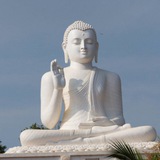
Shrine for pure gold sitting Sakyamuni Buddha at Brahma Palace, Ling Shan scenic area, the most expensive Buddhist compound in modern history. The large complex has world tallest standing bronze Amitabha Buddha statue, pure gold Sakyamuni Buddha statue, world largest Buddha's hand square, Indian style gigantic Brahma Palace, Tibetan style Five Mudras Mandala Palace, Nine Dragons Buddha bathing fountain, Maitreya Buddha with 100 children, Xiangfu Buddhist temple, Thai style Flying Dragon stupas, Buddha's footprints altar and two man-made lakes.
❤1👏1🤩1🆒1
Forwarded from Buddha Dharma books
Free Buddha dharma ebook
On Your Own Two Feet
By Ajahn Sucitto
A GUIDE TO STANDING MEDITATION Standing was one of the positions that the Buddha recommended as a proper basis for mindfulness. Wisely cultivated, it takes strain out of the body, encourages balance and inner stability – and is a support for full liberation.
Free download available:
https://cdn.amaravati.org/wp-content/uploads/2023/01/03/On-Your-Own-Two-Feet-Web.pdf
===
❤1👍1🕊1
Forwarded from Buddha Dharma books
Free Buddha dharma ebook
On Your Own Two Feet
By Ajahn Sucitto
A GUIDE TO STANDING MEDITATION Standing was one of the positions that the Buddha recommended as a proper basis for mindfulness. Wisely cultivated, it takes strain out of the body, encourages balance and inner stability – and is a support for full liberation.
Free download available:
https://cdn.amaravati.org/wp-content/uploads/2023/01/03/On-Your-Own-Two-Feet-Web.pdf
===
👍1🙏1👌1
Forwarded from Words of the Buddha
What is the power of sympathy? There are these four bases of sympathy: generosity, kind speech, doing a good turn and treating all equally. The best generosity is generosity with the Dhamma. The best kind speech is teaching the Dhamma again and again to a good and attentive listener. The best good turn is inciting, encouraging and establishing the ways of faith in the doubting, the ways of virtue in the unvirtuous, the ways of generosity in the mean, and ways of wisdom in the foolish. The best equal treatment is the equality between Stream-Winner and Stream-Winner, between Once-Returner and Once-Returner, between Non-Returner and Non-Returner, and between Noble One and Noble One. This is called the power of sympathy.
Anguttara Nikaya IV 362
🙏2🥰1🤝1🤗1
7. Suppabuddham pabujjhanti
sadà Gotamasàvakà
Yesam divà ca ratto ca
niccam buddhagatà sati. 296.
8. Suppabuddham pabujjhanti
sadà Gotamasàvakà
Yesam divà ca ratto ca
niccam dhammagatà sati. 297.
9. Suppabuddham pabujjhanti
sadà Gotamasàvakà
Yesam divà ca ratto ca
niccam saïghagatà sati. 298.
10. Suppabuddham pabujjhanti
sadà Gotamasàvakà
Yesam divà ca ratto ca
niccam kàyagatà sati. 299.
11. Suppabuddham pabujjhanti
sadà Gotamasàvakà
Yesam divà ca ratto ca
ahimsàya rato mano. 300.
12. Suppabuddham pabujjhanti
sadà Gotamasàvakà
yesam divà ca ratto ca
bhàvanàya rato mano. 301.
MEDITATE ON THE BUDDHA, DHAMMA, SANGHA
BODY AND HARMLESSNESS
SEEK DELIGHT IN MEDITATION
7. Well awakened the disciples of Gotama ever arise - they who by day and night always contemplate the Buddha. 8 296.
8. Well awakened the disciples of Gotama ever arise - they who by day and night always contemplate the Dhamma. 9 297.
9. Well awakened the disciples of Gotama ever arise - they who by day and night always contemplate the Sangha. 10 298.
10. Well awakened the disciples of Gotama ever arise - they who by day and night always contemplate the body. 11 299.
11. Well awakened the disciples of Gotama ever arise - they who by day and night delight in harmlessness. 300.
12. Well awakened the disciples of Gotama ever arise - they who by day and night delight in meditation. 301.
Story
A youth escaped from a demon by uttering the words "Praise be to the Buddha". Later, that very demon and another helped him. The king, hearing the story, approached the Buddha and inquired whether meditation on the Buddha would be sufficient to ward off evil spirits. Thereupon the Buddha uttered these verses.
===
Dhammapada, beloved and favorite teachings of the Buddha channel:
https://xn--r1a.website/dhammapadas
===
Telegram
Dhammapada - Buddha Dharma Teachings
Daily teachings of the Dhammapada, beloved and favorite teachings of the Buddha
🙏2👏1💯1
Forwarded from Buddha Dharma books
Free Buddha Dharma ebook
The Buddha and the Monkey
By Bhante Shravasti Dhammika
Free download available:
https://budblooms.org/the-buddha-and-the-monkey/
===
❤1🙈1🙉1🙊1
Forwarded from Buddha Dharma books
Free Buddha Dharma ebook
The Buddha and the Monkey
By Bhante Shravasti Dhammika
A little to the south-east of the entrance of the Mahabodhi Temple at Bodh Gaya are three stupas made out of carved stones held together by iron clamps. The form of these stupas and the decorations on them indicate that they are of Pala workmanship and probably date from between the 9 th and 12th centuries CE. On each side of the base of the stupas are small niches each depicting one of the four main events in the life of the Buddha – his birth, enlightenment, first preaching and his final Nirvana. On the drum of each stupa are larger elaborately decorated niches containing images of the Buddha either meditating or preaching. However, the niche on both the east and the north side of the last of these stupas immediately catch the eye of the observer as being different from the others.
Free download available:
https://budblooms.org/the-buddha-and-the-monkey/
===
🙈1🙉1🙊1
13. Duppabbajjam durabhiramam
duràvàsà gharà dukhà
Dukkho' samànasamvàso
dukkhànupatitaddhagu
Tasmà na c'addhagu siyà
na ca dukkhànupatito siyà. 302.
HARD IS RENUNCIATION
13. Difficult is renunciation, difficult is it to delight therein. Difficult and painful is household life. Painful is association with those who are incompatible. Ill befalls a wayfarer (in samsàra). Therefore be not a wayfarer, be not a pursuer of ill. 302.
Story
A prince became a monk and was meditating alone in a forest. At night he heard the festive music in the city and was discontented with his solitary life. A tree-deity encouraged him to take an interest in the lonely life . Later, the discontented monk went to the Buddha and related what had happened. Thereupon the Buddha discoursed to him on the difficulties of a worldly life.
===
Vajrayana Tantrayana Buddhism channel:
https://xn--r1a.website/tantrayanabuddhism
Tibetan Buddhism - Vajrayana, Tantrayana and esoteric Buddhism channel:
https://xn--r1a.website/tibetanbuddha
===
Telegram
Vajrayana Tantrayana Buddhism
Buddha teachings from the Vajrayana, esoteric, secret or Tantrayana vehicle
🎉1🙏1🫡1
It’s when a mendicant—gone to a wilderness, or to the root of a tree, or to an empty hut—sits down cross-legged, sets their body straight, and establishes mindfulness in their presence. Just mindful, they breathe in. Mindful, they breathe out. Breathing in heavily they know: ‘I’m breathing in heavily.’ Breathing out heavily they know: ‘I’m breathing out heavily.’ When breathing in lightly they know: ‘I’m breathing in lightly.’ Breathing out lightly they know: ‘I’m breathing out lightly.’ They practice like this: ‘I’ll breathe in experiencing the whole body.’ They practice like this: ‘I’ll breathe out experiencing the whole body.’They practice like this: ‘I’ll breathe in stilling the physical process.’ They practice like this: ‘I’ll breathe out stilling the physical process.’ As they meditate like this—diligent, keen, and resolute—memories and thoughts tied to domestic life are given up. That’s how a mendicant develops mindfulness of the body.
Partial excepts from MN 119 : Kāyagatāsatisutta
❤1🙏1😇1
Forwarded from Buddha
A Position of Strength
A Theravada monk imparts a timeless lesson on the relationship between stillness and action
By Thanissaro Bhikkhu
Part 1 of 2
The Buddha’s teachings are all about the importance of action: how you shape your life and how you have an impact on others by what you do and say and think.
Yet they also put a lot of emphasis on being very still.
The two teachings actually go together, because when you’re acting, you have to come from a position of strength. Stillness provides that strength. Ajaan Lee’s image is of a person walking: You get the strength from the foot on the ground, not from the foot that’s moving. If your actions are going to be skillful, they have to come from a place where the mind can consider things carefully, clearly, and quickly. The more the mind is still, the more it’s able to do these things. Above all else, the mind needs strength, and it gathers its strength from meditation.
When you sit here with the breath, tell yourself that you have no other responsibilities right now—at work, at home, in the family. Just let them all go. As soon as a thought begins to move in the direction of any of those things, just cut it off. And when you cut it off, have a sense that you’ve liberated the mind, not that you’ve cut off anything vital. You’ve cut off all the vines that come to entangle and pull you down. The mind can now stand tall and free.
Give the mind time to be right here and settle into your body. We’re always so focused on running out all the time. To counter this, think of yourself backing into your body—feeling the back, feeling the legs, feeling the arms, all from within, being very conscious of where all the parts of the body are right now. If you give the mind this task, it won’t have any extra ability to take on other things. It’s as if the mind has only so many hands, and you’re filling all its hands with the work of being right here with the breath. So notice how the breath energy feels in your physical hands, in your wrists, coming up your arms, your shoulders. If it doesn’t feel good, think of it flowing more freely to nourish those parts of the body. Then start again with the feet—coming up the ankles, the calves, the thighs, the pelvis, up the back, through the neck and all the muscles around the skull and in the head.
Try to be fully aware of these things as much as you can, and that should occupy your awareness. If the mind tells you it has other things to think about, you can tell it, “not right now.” This is one of the reasons why we have a dhamma talk, because the mind has so many ways of getting out of the meditation, and the dhamma talk is meant to give you ideas for how you can say “no” to these things.
First off, you need strength for all the important duties you have to take care of. If you’re coming from a position of weakness or fatigue, you’re not going to do well. The actions that shape your life will shape it in a very weak and fatigued way. So you start with the first strength, the strength of the conviction: that your actions really are important, they require care, and they require this kind of foundation.
Then you need persistence or effort. This has to build on conviction, because you might find yourself getting more and more tired when the days are long or your body’s not feeling strong. On those days, it’s very easy to give up and say, “Well, it doesn’t matter. I’m not going to care about that anymore.” And of course, there are some things that don’t really require a lot of care, but there are things that do, and you want to be prepared for them whenever they may come. They don’t signal themselves ahead of time, saying, “Tomorrow there’s going to be a big issue you’ve got to prepare for, so get ready.” Sometimes they just spring up at you, so you want to be in a position where you’re ready for whatever they might do to challenge you.
This combination of conviction and persistence is what keeps you going and trying to do your best. Then, when the time comes, you can rest.
Telegram
Buddha
Buddha dharma teachings from the suttas and commentaries
🙏1💯1🦄1
Forwarded from Buddha
Take time and really move into this time fully, move into your body fully, right now, because this awareness filling the body is what heals the body and heals the mind. Then keep at it. This requires mindfulness, the ability to keep something in mind. That’s another strength, because if you forget, all of a sudden you find yourself off in Omaha or New Jersey or wherever. Then you wonder: how did you get there? Well, you forgot. Something came bubbling up from inside and now here you are.
===
Buddha dharma teachings channel:
https://xn--r1a.website/lorddivinebuddha
===
Telegram
Buddha
Buddha dharma teachings from the suttas and commentaries
👍1🤝1😎1
14. Saddho sãlena sampanno
yasobhogasamappito
Yam yam padesam bhajati
tattha tattheva pujito. 303.
THE DEVOUT ARE RESPECTED EVERYWHERE
14. He who is full of confidence 12 and virtue, possessed of fame and wealth, he is honoured everywhere, in whatever land he sojourns. 303.
Story
A devout follower was greatly honoured when he visited the Buddha. The Venerable ânanda inquired of the Buddha whether he would have received the same honours if he had visited some other religious teacher. Thereupon the Buddha uttered this verse.
===
Buddha dharma teachings channel:
https://invite.viber.com/?g2=AQAKw1y3rv%2F6sk61PI2W4izuIiaEZj8YZujhY1tSzL%2B07s7rFnVFDAd0bAYFaMLw
===
Viber
Buddha
Buddha dharma teachings from the suttas and commentaries from Theravada tradition
❤1💯1🤝1