Forwarded from Words of the Buddha
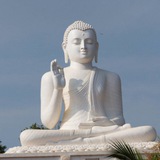
Big Buddhas of Wat Pha Sorn Kaew Buddhist temple, Phetchabun, Thailand
👏3🤩1😎1
Forwarded from Buddha Dharma books
Free Buddha Dharma ebook
A Naughty Jataka
By Bhante Shravasti Dhammika
Free download available:
https://budblooms.org/a-naughty-jataka/
===
🙈1🙉1🙊1
Forwarded from Buddha Dharma books
Free Buddha Dharma ebook
A Naughty Jataka
By Bhante Shravasti Dhammika
The Kacchapa Jataka is one of several rude stories in the Jataka and has, I think, never been translated into English before. Like several other risqué stories in the collection, Professor E. B. Cowell who edited the first complete English translation of the Jataka, thought it best to render it into Latin so that only scholars could read it. The purpose of the story is to highlight the Bodhisatta’s equanimity and non-retaliation. But the author or authors also uses the opportunity to poke fun at greedy brahmans who carry away more food than they can eat from various festivals and rituals, the tortoise’s shell looking something like a begging bowl. A ribald element is included to add to the fun and the tone of the story is generally light-hearted. In keeping with this ribald light-heartedness I have translated angajata as ‘dick’. The Kacchapa (Tortoise) and the Kondannas were the totems of two clans or tribes that usually did not intermarry. The monkey (makkata) in this story is a Rhesus Macaque, the most aggressive and mischievous of the several species of primates found in northern India. Interestingly, while the Bodhisatta is often depicted in Jataka stories as being reborn as one of these other types of monkeys, he is never reborn as a Macaque. One can well imagine village people roaring with laughter as a monk or learned lay person related this story to them at a religious festival or on a full-moon night. I would like to thank Anandajoti Bhikkhu for helping me with this translation.
Free download available:
https://budblooms.org/a-naughty-jataka/
===
👍1💯1🍾1
Forwarded from Buddha
Thirteen Dhutanga Practices
There do exist thirteen ascetic practices: two for the robes, five for the food, five for the spot of residence, and one for the posture (known to be the dhutanga of effort).
1. pamsukula : abandoned robes
2. tecivarika : three robes
3. pindapata : collection by means of one's bowl
4. sapadanacarika : food collection without skipping houses
5. ekasanika : a single meal
6. pattapindika : everything within the bowl
7. khalupacchabhattika : no longer accepting any extra food after having started to take the meal
8 arannika : to remain in the forest
9. rukkhamula : to remain beneath a tree
10. abbhokasika : to remain on the bare earth without shelter
11. susanika : to remain among charnels
12. yathasantatika : to sleep at the alloted spot
13. nesajjika : to renonce to the lying posture
The Origins of Thirteen Ascetics Practices
Long before Buddha appeared into this world, there did exist ascetic practices designed for oppressing the body in as variegated as numerous ways. Those who adopted them believed that they would enable them to get liberated from the sorrow any living being. On the other hand, others were convinced that the ultimate goal of existence lied in knowing how to enjoy it to the full and focused all their efforts on best enjoying sensuous pleasures.
From his very first teaching, Buddha categorically rejected these two paths that he qualified of extreme paths. In this teaching, he explains us that only the moderate path, the middle path, can lead us to the development of wisdom and right knowledge of reality. The two extreme paths develop, on their behalf, attachments and false views, contrary to the moderate path, which enables the lessening of attachments and the development of right view.
The conduct laid down by the Blessed one for monks and nuns (the patimokkha), for novices (the 10 precepts) and for the laity (the 5 or 8 precepts) is sufficient guidance to anyone who conveniently trains into satipatthana. To those who wish to much more rapidly or easily reach nibbana, he also taught a set of ascetic practices which are non-compulsory (the 13 dhutangas that are not included into the vinaya), which enables to reduce one's needs to the least, thus sparing, the one who adopts these practices, from pride, greed, and aversion, which constitute the main poisons on the path to liberation (only by practising certain dhutangas in daily life can we really understand this fact; results are impressing).
Dhutangas are not designed for superior beings, neither for inferior beings. They are beneficial for all those who are able to put them into practice. A dhutanga is not an extreme practice; it is a mere practice that enables the mind to be rapidly and easily purified, absolute prerequisite to the development of attention and concentration. It reduces useless impediments, such as excessive food, numerous clothes to look after, the agitation of inhabited areas, very various attachments. Provided it is conveniently adopted, no dhutanga does cause to arise any kind of tiredness or oppression of the body or the mind. If a dhutanga involves a great difficulty or a difficult effort to an individual, he shouldn't practice it, as it would become a practice extreme for himself.
Everyone is free, according to his capacities and wishes, to adopt one or several dhutangas, which each comprises three levels of restriction. The aim of these practices lies in providing an environment as auspicious as possible for renunciation.
Thus, the 13 dhutangas, which mean " renunciation " [to abandon (dhuta); state of mind (anga)], are a set of practices designed for considerably reducing our attachments, in order to reach nibbana at the soonest, like a bird that crosses the cloudless sky on a straight line.
===
Words of the Buddha channel:
https://xn--r1a.website/wordsofbuddha
===
Telegram
Words of the Buddha
Daily teachings of Buddha Dharma
❤1👍1🫡1
Forwarded from Words of the Buddha
The Crystal Sanctuary (Hall of mirrors) at the Crystal Temple, Wat Tha Sung Buddhist temple complex, Uthai Thani, Thailand.
🔥1🤩1😎1
9. Sãladassanasampannam
dhammaññham saccavedinam
Attano kammakubbànam
tam jano kurute piyam. 217.
THE VIRTUOUS ARE DEAR TO ALL
9. Whoso is perfect in virtue, 7 and insight, 8 is established in the Dhamma, 9 has realized the Truths, 10 and fulfils his own duties 11 - him do folk hold dear. 217.
Story
Some youths carrying cakes went past the Buddha and the Sangha, making no offering to them. In the rear they saw the Venerable Kassapa. Taking a liking to him, they offered him some cakes. The Venerable Kassapa advised them to offer some to the Buddha and the Sangha, who were sitting by the wayside. The monks were indignant, remarking that it was favouritism. Thereupon the Buddha declared that the Venerable Kassapa was dear even to the gods and uttered this verse.
===
Buddha dharma teachings channel:
https://xn--r1a.website/lorddivinebuddha
===
Telegram
Buddha
Buddha dharma teachings from the suttas and commentaries
🙏2👏1
Forwarded from Words of the Buddha
“In the wilderness, at a tree’s root, or an empty hut, O mendicants, recollect the Buddha, and no fear will come to you.
If you can’t recollect the Buddha—the eldest in the world, the chief of men—then recollect the teaching, emancipating, well taught.
If you can’t recollect the teaching—emancipating, well taught—then recollect the Saṅgha, the supreme field of merit.
Thus recollecting the Buddha, the teaching, and the Saṅgha, mendicants, fear and terror and goosebumps will be no more.”
SN 11.3 : Dhajaggasutta
🕊1🎄1
Forwarded from Words of the Buddha
Thirteen Thudong Practices
Here are the five factors which each practitioner of the dhutangas should develop:
1. To be without greed.
2. To know how to be contented with very little.
3. To really want to get rid of kilesas.
4. To remain on a calm spot.
5. To no longer wish any extra existence in whatsoever world and conditions (in other parlance, wishing parinibbana).
The first factors are against greed. They contribute in eliminating sensory desires. The might whose the last of these factors is object can be cultivated by means of wisdom.
Through alobha we eliminate pratices that are meant for developing sensory desires (kamasukhallika nuyoga), and through amoha, we eradicate all practices that oppress the body (attakilamatha nuyoga).
Buddha congratulates those who adopt the dhutangas by fully developing the above mentioned five factors.
According to another commentary, the factors needed to the practice of dhutangas are:
saddha, faith, confidence.
hirima, the fact to be afraid or ashamed of evil deeds.
dhitima, the fact to be calm, self-possessed and concentrated on one's deeds.
akuha, the indifference towards notoriety, renown, consideration on others' behalf.
atthavasi, the fact to have the realisation of dhamma as unique aim.
alobha, straightforwardness.
sikkhakama, the fact to be naturally and constantly virtuous.
alhasamadana, the fact to prevent oneself from breaking one of these practices.
anujjhanabahula, the fact not to criticize others, even if they are at fault.
mettavihari, the fact to constantly remain filled with benevolence.
A serious practitioner of the dhutangas has to be conveniently rooted into one of these ten factors. The one who knows how to stick to it is in the position to reach nibbana.
The elements that ought to be avoide:
papiccha, to want unhealthy things.
icchapakata, to oppress one's mind through desires.
kuhaka, to try to draw consideration from others.
luddha, covetousness, cupidity.
odarika, to be abusively preoccupied by one's food.
labhakama, to want to get involved into numerous matters.
yasakama, to want to have many disciples, to want to be worshipped by many people.
kittikama, to want notoriety, a great renown.
If a bhikkhu practises the dhutangas according to one or several of these eight points, he will certainly be subject to criticism and contempt on others' behalf. He even risks to experience some disabilities during his next existence, such as ugliness, malformation, a severed limb, if it is not the realm of hells. That's why one should strive for developing the needed factors, and to avoid those who are detrimental.
===
Dhammapada, beloved and favorite teachings of the Buddha channel:
https://xn--r1a.website/dhammapadas
===
Telegram
Dhammapada - Buddha Dharma Teachings
Daily teachings of the Dhammapada, beloved and favorite teachings of the Buddha
🙏1💯1
Forwarded from Words of the Buddha
Paper lamp festival on Purnima, Vesak celebration, Borobudur temple, Java island, Indonesia.
❤2🔥1👏1
Forwarded from Words of the Buddha
Free Buddha Dharma ebook
Things as They Can Be
Essays on the Buddhist Path
By Thanissaro Bhikkhu
Free download available:
https://www.dhammatalks.org/Archive/Writings/Ebooks/Things_asTheyCanBe_260116.pdf
===
👍1👏1🙏1
Forwarded from Words of the Buddha
Free Buddha Dharma ebook
Things as They Can Be
Essays on the Buddhist Path
By Thanissaro Bhikkhu
The tenth collection of essays: In the Context of the Deathless, The View from Outside the World, The Desire for Awakening, The Kamma of Goodwill, All about Acceptance, In the Same Way, To Feed Is to Suffer, The Desire to Make a Difference, Things as They Can Be, A Beam of Light that Doesn’t Land, and Deep like the Ocean.
Free download available:
https://www.dhammatalks.org/Archive/Writings/Ebooks/Things_asTheyCanBe_260116.pdf
===
👍1👏1💯1
10. Chandajàto anakkhàte
manasà ca phuño siyà
Kàmesu ca appañibaddhacitto
uddhamsoto'ti vuccati. 218.
THE NON-ATTACHED GO UPSTREAM
10. He who has developed a wish for the Undeclared 12 (Nibbàna), he whose mind is thrilled (with the three Fruits 13), he whose mind is not bound by material pleasures, such a person is called an "Upstream-bound One". 14 218.
Story
Some pupils inquired of their preceptor, who had attained Anàgàmi (Never-Returner), whether he had attained any stage of Sainthood. The preceptor did not answer the question as even lay followers could become Anàgàmis. He waited until he would attain Arahantship. Unfortunately he died and was reborn in a Pure Abode (Suddhàvàsa) where never-Returners seek birth until they attain Arahantship. The pupils went to the Buddha weeping. The Buddha remarked that death was inevitable. They replied that they were sorry as the preceptor had died without answering their question. Thereupon the Buddha uttered this verse.
===
Words of the Buddha channel:
https://xn--r1a.website/wordsofbuddha
===
Telegram
Words of the Buddha
Daily teachings of Buddha Dharma
👍1🙏1
Buddhanussati, one of the four protective meditation, is recollections of the qualities of the Buddha, namely, araham (the perfect one who has eliminated all the defilements, or someone who has reached the state of great purity and perfection), Sammasambuddho (fully enlightened), Vijjacarana-sampanno (impeccable in conduct and understanding), Sugato (well farer), Lokavidu (the knower of the worlds), Anuttaro purisadamma-sarathi (who is unrivalled in taming those who are untamed), Sattha deva-manussanam (teacher of gods and humans), buddho (awake) and bhagava (the Blessed One).
🙏2👌1🫡1