Forwarded from Buddha
Loving Kindness in Plain English - The Practice of Metta by Bhante Henepola Gunaratana
👏2👌1
Forwarded from Words of the Buddha
11 Benefits of Loving-Friendliness Meditation
Theravadin Buddhist monk Bhante Gunaratana outlines the ways meditation can benefit our mind and our body—and even our complexion.
By Bhante Henepola Gunaratana
Part 2 of 2
8. Your mind immediately becomes calm.
Metta stimulates a friendly feeling that makes us calm and happy. It truly is a wonderful way of life!
9. Your complexion brightens.
Metta shows in your face. As you practice metta, joy arises. At first it is barely noticeable, but as the joy increases, it begins to pervade your whole mind and body. Metta does not rely on any particular time, place, or condition. Once aroused, it can remain present in you the rest of your life. Your face cannot hide what is going on in your mind. When you are angry, it shows on your face. When you are peaceful, everyone notices. The energy of metta spreads through your bloodstream and nourishes your whole being. You look bright and clear, calm and peaceful.
10. You’ll die with a clear mind.
The thought of dying peacefully can be comforting. When we have unresolved conflicts, death can be difficult. Loving-friendliness can make dying easier for the one passing away and for those around her.
There is a difference between true peace and the appearance of peace. You may seem cheerful; you might even make people laugh. But when you are approaching death, if greed, hatred, and delusion are still lurking deep down in your psyche, that joviality will vanish. Practicing loving-friendliness sinks into the depths of your consciousness and makes your mind genuinely calm. With metta, you will die peacefully, without confusion.
In the Anguttara Nikaya, Samavati, the wife of the king the Buddha had declared chief among those who practiced metta, was burned alive while leading a loving-friendliness retreat for women. Magandiya was the culprit. So proud of her rare beauty, Magandiya rejected suitor after suitor. One day her father saw the Buddha sitting under a tree and asked him to marry his daughter. The Buddha explained his vow of celibacy and declined in a way that Magandiya found offensive, and she was determined to seek revenge. Magandiya knew that Samavati was one of the Buddha’s favorite laywomen, so she set fire to the house where Samavati was leading a metta retreat for 500 women. They all died in the fire.
As she lay dying, Samavati declared, “Over many lifetimes our bodies have been burned over and over again. As you pass from birth to death and back to birth, be heedful!” Her words were so powerful that the 500 women dying alongside her were inspired to practice metta meditation in their final moments. Although their bodies were burned by fire, their minds were free.
11. You’ll die in peace.
If at the time of death you do not yet comprehend the highest truth, you will still go to a realm of great peace.
If you have not completed the path of awakening before you die, the peaceful mental state generated by metta will still allow you to be reborn in a heavenly realm.
Regardless of whether we consider heaven a real or figurative place, this portends well and encourages us to practice loving-friendliness while we can.
From Loving-Kindness in Plain English: The Practice of Metta, by Bhante Gunaratana.
===
Bhante Henepola Gunaratana is a Buddhist monk from Sri Lanka and the author of Mindfulness in Plain English. He is president of the Bhavana Society in High View, West Virginia, an organization that promotes meditation and monastic life.
===
Part 1 of 2:
https://xn--r1a.website/lorddivinebuddha/4314
Part 2 of 2:
https://xn--r1a.website/wordsofbuddha/5359
===
Words of the Buddha channel:
https://xn--r1a.website/wordsofbuddha
===
Telegram
Words of the Buddha
Daily teachings of Buddha Dharma
🔥1🤝1🆒1
8. Tauhàya jàyati soko
tauhàya jàyati bhayam
Tauhàya vippamuttassa
natthi soko kuto bhayam. 216.
GRIEF SPRINGS FROM CRAVING
8. From craving springs grief, from craving springs fear; for him who is wholly free from craving there is no grief, much less fear. 216.
Story
A brahmin ploughed his field and told the Buddha who visited him daily, that he would share the harvest with the Buddha. Unfortunately an unexpected storm destroyed the crop and the brahmin was sorry that he could not keep his promise. The Buddha visited him and consoling him, spoke on the nature of craving.
===
Free Buddhism books, teachings, podcasts and videos from Theravada, Mahayana and Vajrayana traditions:
https://xn--r1a.website/buddha_ebooks
===
Telegram
Buddha Dharma books
Free Buddhism books, teachings, podcasts and videos from Theravada, Mahayana and Vajrayana traditions
👍1👏1🙏1
Forwarded from Words of the Buddha
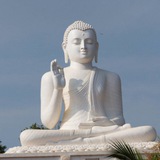
Big Buddhas of Wat Pha Sorn Kaew Buddhist temple, Phetchabun, Thailand
👏3🤩1😎1
Forwarded from Buddha Dharma books
Free Buddha Dharma ebook
A Naughty Jataka
By Bhante Shravasti Dhammika
Free download available:
https://budblooms.org/a-naughty-jataka/
===
🙈1🙉1🙊1
Forwarded from Buddha Dharma books
Free Buddha Dharma ebook
A Naughty Jataka
By Bhante Shravasti Dhammika
The Kacchapa Jataka is one of several rude stories in the Jataka and has, I think, never been translated into English before. Like several other risqué stories in the collection, Professor E. B. Cowell who edited the first complete English translation of the Jataka, thought it best to render it into Latin so that only scholars could read it. The purpose of the story is to highlight the Bodhisatta’s equanimity and non-retaliation. But the author or authors also uses the opportunity to poke fun at greedy brahmans who carry away more food than they can eat from various festivals and rituals, the tortoise’s shell looking something like a begging bowl. A ribald element is included to add to the fun and the tone of the story is generally light-hearted. In keeping with this ribald light-heartedness I have translated angajata as ‘dick’. The Kacchapa (Tortoise) and the Kondannas were the totems of two clans or tribes that usually did not intermarry. The monkey (makkata) in this story is a Rhesus Macaque, the most aggressive and mischievous of the several species of primates found in northern India. Interestingly, while the Bodhisatta is often depicted in Jataka stories as being reborn as one of these other types of monkeys, he is never reborn as a Macaque. One can well imagine village people roaring with laughter as a monk or learned lay person related this story to them at a religious festival or on a full-moon night. I would like to thank Anandajoti Bhikkhu for helping me with this translation.
Free download available:
https://budblooms.org/a-naughty-jataka/
===
👍1💯1🍾1
Forwarded from Buddha
Thirteen Dhutanga Practices
There do exist thirteen ascetic practices: two for the robes, five for the food, five for the spot of residence, and one for the posture (known to be the dhutanga of effort).
1. pamsukula : abandoned robes
2. tecivarika : three robes
3. pindapata : collection by means of one's bowl
4. sapadanacarika : food collection without skipping houses
5. ekasanika : a single meal
6. pattapindika : everything within the bowl
7. khalupacchabhattika : no longer accepting any extra food after having started to take the meal
8 arannika : to remain in the forest
9. rukkhamula : to remain beneath a tree
10. abbhokasika : to remain on the bare earth without shelter
11. susanika : to remain among charnels
12. yathasantatika : to sleep at the alloted spot
13. nesajjika : to renonce to the lying posture
The Origins of Thirteen Ascetics Practices
Long before Buddha appeared into this world, there did exist ascetic practices designed for oppressing the body in as variegated as numerous ways. Those who adopted them believed that they would enable them to get liberated from the sorrow any living being. On the other hand, others were convinced that the ultimate goal of existence lied in knowing how to enjoy it to the full and focused all their efforts on best enjoying sensuous pleasures.
From his very first teaching, Buddha categorically rejected these two paths that he qualified of extreme paths. In this teaching, he explains us that only the moderate path, the middle path, can lead us to the development of wisdom and right knowledge of reality. The two extreme paths develop, on their behalf, attachments and false views, contrary to the moderate path, which enables the lessening of attachments and the development of right view.
The conduct laid down by the Blessed one for monks and nuns (the patimokkha), for novices (the 10 precepts) and for the laity (the 5 or 8 precepts) is sufficient guidance to anyone who conveniently trains into satipatthana. To those who wish to much more rapidly or easily reach nibbana, he also taught a set of ascetic practices which are non-compulsory (the 13 dhutangas that are not included into the vinaya), which enables to reduce one's needs to the least, thus sparing, the one who adopts these practices, from pride, greed, and aversion, which constitute the main poisons on the path to liberation (only by practising certain dhutangas in daily life can we really understand this fact; results are impressing).
Dhutangas are not designed for superior beings, neither for inferior beings. They are beneficial for all those who are able to put them into practice. A dhutanga is not an extreme practice; it is a mere practice that enables the mind to be rapidly and easily purified, absolute prerequisite to the development of attention and concentration. It reduces useless impediments, such as excessive food, numerous clothes to look after, the agitation of inhabited areas, very various attachments. Provided it is conveniently adopted, no dhutanga does cause to arise any kind of tiredness or oppression of the body or the mind. If a dhutanga involves a great difficulty or a difficult effort to an individual, he shouldn't practice it, as it would become a practice extreme for himself.
Everyone is free, according to his capacities and wishes, to adopt one or several dhutangas, which each comprises three levels of restriction. The aim of these practices lies in providing an environment as auspicious as possible for renunciation.
Thus, the 13 dhutangas, which mean " renunciation " [to abandon (dhuta); state of mind (anga)], are a set of practices designed for considerably reducing our attachments, in order to reach nibbana at the soonest, like a bird that crosses the cloudless sky on a straight line.
===
Words of the Buddha channel:
https://xn--r1a.website/wordsofbuddha
===
Telegram
Words of the Buddha
Daily teachings of Buddha Dharma
❤1👍1🫡1
Forwarded from Words of the Buddha
The Crystal Sanctuary (Hall of mirrors) at the Crystal Temple, Wat Tha Sung Buddhist temple complex, Uthai Thani, Thailand.
🔥1🤩1😎1
9. Sãladassanasampannam
dhammaññham saccavedinam
Attano kammakubbànam
tam jano kurute piyam. 217.
THE VIRTUOUS ARE DEAR TO ALL
9. Whoso is perfect in virtue, 7 and insight, 8 is established in the Dhamma, 9 has realized the Truths, 10 and fulfils his own duties 11 - him do folk hold dear. 217.
Story
Some youths carrying cakes went past the Buddha and the Sangha, making no offering to them. In the rear they saw the Venerable Kassapa. Taking a liking to him, they offered him some cakes. The Venerable Kassapa advised them to offer some to the Buddha and the Sangha, who were sitting by the wayside. The monks were indignant, remarking that it was favouritism. Thereupon the Buddha declared that the Venerable Kassapa was dear even to the gods and uttered this verse.
===
Buddha dharma teachings channel:
https://xn--r1a.website/lorddivinebuddha
===
Telegram
Buddha
Buddha dharma teachings from the suttas and commentaries
🙏2👏1
Forwarded from Words of the Buddha
“In the wilderness, at a tree’s root, or an empty hut, O mendicants, recollect the Buddha, and no fear will come to you.
If you can’t recollect the Buddha—the eldest in the world, the chief of men—then recollect the teaching, emancipating, well taught.
If you can’t recollect the teaching—emancipating, well taught—then recollect the Saṅgha, the supreme field of merit.
Thus recollecting the Buddha, the teaching, and the Saṅgha, mendicants, fear and terror and goosebumps will be no more.”
SN 11.3 : Dhajaggasutta
🕊1🎄1
Forwarded from Words of the Buddha
Thirteen Thudong Practices
Here are the five factors which each practitioner of the dhutangas should develop:
1. To be without greed.
2. To know how to be contented with very little.
3. To really want to get rid of kilesas.
4. To remain on a calm spot.
5. To no longer wish any extra existence in whatsoever world and conditions (in other parlance, wishing parinibbana).
The first factors are against greed. They contribute in eliminating sensory desires. The might whose the last of these factors is object can be cultivated by means of wisdom.
Through alobha we eliminate pratices that are meant for developing sensory desires (kamasukhallika nuyoga), and through amoha, we eradicate all practices that oppress the body (attakilamatha nuyoga).
Buddha congratulates those who adopt the dhutangas by fully developing the above mentioned five factors.
According to another commentary, the factors needed to the practice of dhutangas are:
saddha, faith, confidence.
hirima, the fact to be afraid or ashamed of evil deeds.
dhitima, the fact to be calm, self-possessed and concentrated on one's deeds.
akuha, the indifference towards notoriety, renown, consideration on others' behalf.
atthavasi, the fact to have the realisation of dhamma as unique aim.
alobha, straightforwardness.
sikkhakama, the fact to be naturally and constantly virtuous.
alhasamadana, the fact to prevent oneself from breaking one of these practices.
anujjhanabahula, the fact not to criticize others, even if they are at fault.
mettavihari, the fact to constantly remain filled with benevolence.
A serious practitioner of the dhutangas has to be conveniently rooted into one of these ten factors. The one who knows how to stick to it is in the position to reach nibbana.
The elements that ought to be avoide:
papiccha, to want unhealthy things.
icchapakata, to oppress one's mind through desires.
kuhaka, to try to draw consideration from others.
luddha, covetousness, cupidity.
odarika, to be abusively preoccupied by one's food.
labhakama, to want to get involved into numerous matters.
yasakama, to want to have many disciples, to want to be worshipped by many people.
kittikama, to want notoriety, a great renown.
If a bhikkhu practises the dhutangas according to one or several of these eight points, he will certainly be subject to criticism and contempt on others' behalf. He even risks to experience some disabilities during his next existence, such as ugliness, malformation, a severed limb, if it is not the realm of hells. That's why one should strive for developing the needed factors, and to avoid those who are detrimental.
===
Dhammapada, beloved and favorite teachings of the Buddha channel:
https://xn--r1a.website/dhammapadas
===
Telegram
Dhammapada - Buddha Dharma Teachings
Daily teachings of the Dhammapada, beloved and favorite teachings of the Buddha
🙏1💯1
Forwarded from Words of the Buddha
Paper lamp festival on Purnima, Vesak celebration, Borobudur temple, Java island, Indonesia.
❤2🔥1👏1
Forwarded from Words of the Buddha
Free Buddha Dharma ebook
Things as They Can Be
Essays on the Buddhist Path
By Thanissaro Bhikkhu
Free download available:
https://www.dhammatalks.org/Archive/Writings/Ebooks/Things_asTheyCanBe_260116.pdf
===
👍1👏1🙏1