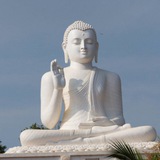
4. Susukham vata jivàma
yesam no natthi kiñcanam
Pitibhakkhà bhañvissàma
devà àbhassarà yathà. 200.
BE WITHOUT IMPEDIMENTS
4. Ah, happily do we live we who have no impediments. 2 Feeders of joy shall we be even as the gods of the Radiant Realm. 200.
Story
One day the Buddha went to a village in quest of alms. Owing to the intervention of Màra, the Evil One, the Buddha could not obtain any food. To Màra who queried whether He was hungry, the Buddha explained the mental attitude of those who are free from impediments.
===
Words of the Buddha channel:
https://invite.viber.com/?g2=AQAFqzqlj7FmI061PX17rxWMAtZ%2BRuso%2FH2KmHKZSgnv7v9DD8X0bDkKnZDr9JDq
===
Viber
Words Of The Buddha
Daily teachings from Buddha Dharma
👏1🙏1😇1
Forwarded from Buddha
Free Buddha Dharma ebook
Truth of Rebirth, The: And Why it Matters for Buddhist Practice
By Thanissaro Bhikkhu
Free download available:
https://www.accesstoinsight.org/lib/authors/thanissaro/truth_of_rebirth.pdf
===
👍1👌1🫡1
Forwarded from Buddha
Free Buddha Dharma ebook
Truth of Rebirth, The: And Why it Matters for Buddhist Practice
By Thanissaro Bhikkhu
Each time you choose one course of action over another, you’re making a wager as to the consequences of your choice. This is especially true if the choice is between something easy that promises pleasant short-term rewards, and something hard that promises great rewards but only after a long time. Will the harder choice be worth the effort? Will the easier one be irresponsible in the long run? As a person embedded in time, there’s no way you can know for sure.
To begin with, there are the particulars of your own personal future: Will you or those you love live long enough to experience the results of your choices? Will disaster interfere to wipe out everything you’ve done?
Then there are the larger uncertainties of life in general: Do we even have choices in our actions, or are all our choices predetermined by some past or outside power beyond our control? If we do have choices, is it worthwhile to struggle over difficult ones? Do they really matter? And even if our choices do matter, how far into the future should we calculate the consequences? Do they shape only this life, or can they shape lives after death?
Arguments based on logic or reason have never been able to settle these issues conclusively, the world’s great religions don’t agree on their answers, and the empirical sciences have no way of answering these questions at all. Yet we all keep having to grapple with these questions. We don’t leave it at, “I don’t know,” and refuse to entertain them, for even the refusal to think about these things is a wager: that ultimately they won’t matter.
Free download available:
https://www.accesstoinsight.org/lib/authors/thanissaro/truth_of_rebirth.pdf
===
✍1👏1
Aloka, the peace dog, is a stray dog which followed the monks during dhutanga in India in 2022. The monks then adopted the dog and brought him back to the United States. He has a distinctive heart‑shaped marking on his forehead. Aloka follows the monks on 108-day, 2,300-mile Walk for Peace Dhutanga journey starting from Fort Worth, Texas, passing through Louisiana, Mississippi, Alabama, Georgia, South Carolina, North Carolina, and Virginia.
❤4👍1🤗1😘1
Forwarded from Buddha
Big Buddha Dordenma, made of bronze and gilded in gold, Kuenselphodrang palace, Thimphu, Bhutan.
🙏4🔥1👏1🫡1
5. Jayam veram pasavati
dukkham seti paràjito
Upasanto sukham seti
hitvà jayaparàjayam. 201.
VICTORY BREEDS HATRED
5. Victory breeds hatred. The defeated live in pain. Happily the peaceful live, giving up victory and defeat. 201.
Story
A King was sad because he had been thrice defeated in battle. The Buddha commented on the evil consequences of both defeat and victory.
===
Dhammapada, beloved and favorite teachings of the Buddha channel:
https://invite.viber.com/?g2=AQBLD6phsgvP%2F061YjEM3K%2BNeH1Yb372b9mtfQX2EmuBpgoLUoc99BDMfzHghrme
===
Viber
Dhammapada - Buddha Dharma Teachings
Daily teachings of the Dhammapada, beloved and favorite teachings of the Buddha
👏1🙏1🏆1
Forwarded from Buddha
Buddham Saranam Gacchami
Dhammam Saranam Gacchami
Sangham Saranam Gacchami
I go to the Buddha for refuge.
I go to the Dhamma for refuge.
I go to the Sangha for refuge.
बुद्धं शरणं गच्छामि। धर्मं शरणं गच्छामि। संघं शरणं गच्छामि।
❤🔥2👏1🙏1👌1
“Monks, all the ways of making merit leading to future happiness do not equal a sixteenth part of the mind-liberation of loving-kindness. The mind-liberation of loving-kindness surpasses them and shines, blazes, and dazzles.”
“Just as the radiance of all the stars does not equal a sixteenth part of the radiance of the moon, the moon’s radiance surpasses them and shines, blazes, and dazzles, so do all the grounds for making merit leading to future happiness not equal a sixteenth part of the mind-liberation of loving-kindness. The mind-liberation of loving-kindness surpasses them and shines, blazes, and dazzles.”
“Just as in the last stage of the night, not yet dawn, the morning star shines, blazes, and dazzles, so do all the grounds for making merit leading to future happiness do not equal a sixteenth part of the mind-liberation of loving-kindness. The mind-liberation of loving-kindness surpasses them and shines, blazes, and dazzles.
Iti 27 Mettācetovimutti Sutta: The Development of Loving-kindness
🙏3🥰1😍1😇1
Forwarded from Buddha Dharma books
Free Buddhism ebook
The Prison of Life
By Bhikkhu Buddhadasa
Free download here:
https://www.lotuslibrary.com/wp-content/uploads/2024/10/1952-Prison-of-Life_Buddhadasa.pdf
===
👏2👌1🕊1
Forwarded from Buddha Dharma books
Free Buddhism ebook
The Prison of Life
By Bhikkhu Buddhadasa
In a lifetime of service to the Buddha, Ajahn Buddhadāsa creatively did whatever he could to help us see how grasping and clinging — especially to ‘me’ and ‘mine’ — is at the center of all our distress, suffering, and dukkha. Simultaneously, he pointed to ‘the life that doesn’t bite its owner’ and how we can practice to live with minds and hearts free and empty of the clinging that bites. He challenged us to find such potential in this life, whether we are ‘religious’ or not, and whatever our vocation, gender, and status. In this booklet, Ajahn Buddhadāsa gets to the heart of the Buddha’s teaching in a simple, direct, and powerful metaphor. He surveys some of the many ways we imprison ourselves, despite however much affluence and privilege we might claim. When we see this, we will seek our freedom more wisely in right practice today and not wait to go off to a monastery or retreat, to find a guru, or to seek whatever external trapping might appear necessary. This talk is one of the many he gave to foreign retreatants during the last eight years of his life. Some of these have already been made into books, such as this one. The original translation has been checked with the original Thai for better accuracy and then edited for easier reading. This eBook edition has been slightly revised from earlier printed editions. We hope you enjoy it; even more that you benefit from practicing its wisdom today...
Free download here:
https://www.lotuslibrary.com/wp-content/uploads/2024/10/1952-Prison-of-Life_Buddhadasa.pdf
===
🔥1🙏1🏆1
6. Natthi ràgasamo aggi
natthi dosasamo kali
Natthi khandhasamà dukkhà
natthi santiparam sukham. 202.
LUST IS A FIRE
6. There is no fire like lust, no crime like hate. There is no ill like the body, 3 no bliss higher than Peace (Nibbàna). 202.
Story
Celebrating the marriage of a young woman her family invited the Buddha and the Sangha to the house for alms. While watching the bride serving the Buddha and His disciples with alms lust arose in the mind of the bride-groom. The Buddha, perceiving his thoughts, uttered this verse.
===
Ajahn Chah, Buddhist teacher of Thai forest meditation of Theravada Buddhism channel:
https://xn--r1a.website/ajahnchah_buddhism
===
Telegram
Ajahn Chah - Theravada Thailand Buddhism
Collection of teachings of Venerable Ajahn Chah, a foremost meditation and Buddhist teacher from Thailand
👍1🙏1🫡1
Forwarded from Buddha
Anondha fish of the churning primordial ocean in Buddhist Cosmology, Sumeru Buddhist temple, Samut Prakan, Thailand.
👏1🎉1🤩1😎1
"There are these two extremes that are not to be indulged in by one who has gone forth. Which two? That which is devoted to sensual pleasure with reference to sensual objects: base, vulgar, common, ignoble, unprofitable; & that which is devoted to self-affliction: painful, ignoble, unprofitable. Avoiding both of these extremes, the middle way realized by the Tathagata — producing vision, producing knowledge — leads to calm, to direct knowledge, to self-awakening, to Unbinding.
"What is the middle way realized by the Tathagata that — producing vision, producing knowledge — leads to calm, to direct knowledge, to self-awakening, to Unbinding? Precisely Noble Eightfold Path: right view, right resolve, right speech, right action, right livelihood, right effort, right mindfulness, right concentration. This is the middle way realized by the Tathagata that — producing vision, producing knowledge — leads to calm, to direct knowledge, to self-awakening, to Unbinding.
Samyutta Nikaya 56 :
Dhammacakkappavattana Sutta
🙏3👍1🫡1
Forwarded from Buddha
So I have heard. At one time the Buddha was staying near Sāvatthī in Jeta’s Grove, Anāthapiṇḍika’s monastery. The Buddha said this:
“There are 32 marks of a great man. A great man who possesses these has only two possible destinies, no other. If he stays at home he becomes a king, a wheel-turning monarch, a just and principled king. [...] He has the following seven treasures: the wheel, the elephant, the horse, the jewel, the woman, the householder, and the commander as the seventh treasure. He has over a thousand sons who are valiant and heroic, crushing the armies of his enemies. After conquering this land girt by sea, he reigns by principle, without rod or sword. But if he goes forth from the lay life to homelessness, he becomes a perfected one, a fully awakened Buddha, who draws back the veil from the world.
And what are the 32 marks?
He is golden colored; his skin shines like lustrous gold.
Partial excerpts from DN 30 : Lakkhanasutta : Marks of a Great Man
🙏2❤1🤩1👌1
7. Jighacchà paramà rogà
samkhàrà paramà dukhà
Etamñatvà yathàbhutam
Nibbànam paramam sukham. 203.
HUNGER IS THE GREATEST AFFLICTION
7. Hunger 4 is the greatest disease. Aggregates 5 are the greatest ill. Knowing this as it really is, (the wise realize) Nibbàna, bliss supreme. 203.
Story
A poor farmer came to hear the Buddha in a state of hunger. Before preaching the Buddha requested the steward to give some food to the hungry man. Some monks were indignant at the Buddha's action. Thereupon the Buddha uttered this verse.
===
Free Buddhism books, teachings, podcasts and videos from Theravada, Mahayana and Vajrayana traditions:
https://xn--r1a.website/buddha_ebooks
===
Telegram
Buddha Dharma books
Free Buddhism books, teachings, podcasts and videos from Theravada, Mahayana and Vajrayana traditions
💯2🙏1🏆1
Forwarded from Buddha
Vayadhamma sankhara, Appamadena sampadetha
At one time the Buddha was staying between a pair of sal trees in the sal forest of the Mallas at Upavattana near Kusinārā at the time of his full extinguishment.
Then the Buddha said to the mendicants: “Come now, mendicants, I say to you all: ‘Conditions fall apart. Persist with diligence.’”
These were the Realized One’s last words.
SN 6.15: Parinibbānasutta
🙏2🕊1😇1
Forwarded from Buddha Dharma books
Free Buddhism ebook
Wordless Questioning
An Introduction to Buddhist Meditation and Reflection
By Bhikkhu Gambhiro
"Wordless Questioning" is a book by Bhikkhu Gambhiro that introduces Buddhist meditation and reflection. It emphasizes experiencing the truth of the teachings through direct experience rather than relying solely on external information or waiting for specific experiences to arise. The book explores how to use the practice of meditation to let go of the need for more information and find peace.
Free download available:
https://drive.google.com/file/d/1-QMbG2zVJtKC1G2cmY69OKRfi0Pnq3os/view?usp=drive_link
===
❤1👌1🏆1