War in Ukraine costs Russian ethnic minorities+rural Russians dearly. Tuva Republic saw 54.32 war deaths per 10,000 working age men, Buryatia 39.69, & Altai Republic 28. Tuvans & Buryats very overrepresented in casualty %s. Rural Russians in places like Magadan also hit hard.
😢43🤣22🫡22👍7🤔7🔥3😭2❤1🤬1🎉1🤡1
In 1961 Angola’s poor, sparsely populated condition opened the door to mass colonial settlement. From 1945-1961 1,000 Portuguese settlers arrived monthly. Each immigrant family received a house, livestock, seed, & up to 425 acres of land from the Portuguese colonial government.
Looking at country profiles of a country the size of Angola from early 1960s is like seeing an Angola from another world. A massive country twice the size of France had only 5 million people. Today Angola still has a population far less than France despite being much larger. Angola will likely never have even the same population density.
Looking at country profiles of a country the size of Angola from early 1960s is like seeing an Angola from another world. A massive country twice the size of France had only 5 million people. Today Angola still has a population far less than France despite being much larger. Angola will likely never have even the same population density.
👍39🔥10👏2✍1🆒1
Very hard to see how South Korea can course correct in time. Despite its much ballyhooed demographic rally in 2025 (which pumped TFR back to a still horrible 0.80 from an abysmal 0.72) it seems to be in for a very rough ride going forward.
Its future seems to be one of significant demographic decline. This decline will speed up dramatically in the late 2030s and 2040s and the national population is almost certain to be back below 50 million by 2050 (the same population it had in 2010).
Its future seems to be one of significant demographic decline. This decline will speed up dramatically in the late 2030s and 2040s and the national population is almost certain to be back below 50 million by 2050 (the same population it had in 2010).
💯32😱5✍3👍2
China’s urban population looks to have peaked at ~1.15 billion people. According to the UN over 83% of China’s population is now Urban. China is also no longer home to the world’s largest urban population, again according to the UN definition. India now seems to hold that title.
👍24🤔8🔥3👌3❤1
The Napoleonic War had absolutely catastrophic demographic consequences for France. World War I was the 2nd largest demographic disaster w/TFR falling to just 1.23 in 1916 & over 1M dead. At the outbreak of WWII in 1939 France has almost the exact same population it had in 1914.
From 1946-1967, after decades of suboptimal demographics,France was able to achieve a very respectable run btwn ~2.67-3.04 TFR. Those days are long over,the country just recorded its lowest fertility rate since 1918 at 1.56! Also natural decline returned for 1st time since 1945.
Remember that in 2024 only 2/3rds of newborns were to two parents born in France (19% were to two foreign born parents). So French citizen TFR likely well below 1.50.
From 1946-1967, after decades of suboptimal demographics,France was able to achieve a very respectable run btwn ~2.67-3.04 TFR. Those days are long over,the country just recorded its lowest fertility rate since 1918 at 1.56! Also natural decline returned for 1st time since 1945.
Remember that in 2024 only 2/3rds of newborns were to two parents born in France (19% were to two foreign born parents). So French citizen TFR likely well below 1.50.
😭50😢15👍7🔥4💯4❤3✍3🎉1😨1
The Vietnamese have staying power. They made it through a horrific famine in WWII that killed btwn 400K-2M. The first Indochina war of 1946-1954 which cost them 400K dead, the 2nd from 1955-1975 which cost 2M dead, & 3rd 1978-1991 with 105K KIA. & their TFR is still above 1.9!
They are demographically crushing Thailand & Malaysia, have a higher TFR than the Philippines, & are at basically the same level as Indonesian fertility (which seems headed for a crash based on marriage data).
https://x.com/annatar_i/status/2008828680550994421
They are demographically crushing Thailand & Malaysia, have a higher TFR than the Philippines, & are at basically the same level as Indonesian fertility (which seems headed for a crash based on marriage data).
https://x.com/annatar_i/status/2008828680550994421
X (formerly Twitter)
Annatar (@Annatar_I) on X
The birth differential between Vietnam & Thailand is rising rapidly, it was 2.2x in 2015 & 3.5x in 2025, combined with Vietnam's GDP per capita growing much faster, in the decades ahead Vietnam will have a massive economy compared to Thailand.
👏53👀6🍌3🙉3🦄3🥱1
Birth rates of China, Japan, South Korea, & Taiwan are now all below 6.0 per 1,000 (with Taiwan even below 5.0!). Their fertility rates are ~0.72 Taiwan, ~0.80 for South Korea, ~0.95 for China, & ~1.12 for Japan. So much policy has been focused on turning this around & failed.
😱30😢19🔥9❤3👍3🥰3🌭1
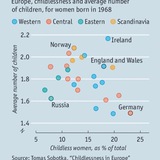
Childlessness is on the rise in the U.S. & most countries globally. Higher childlessness rates make demographic recovery much more difficult as a considerable number of those who do have kids would need to have more than 2 just to avoid demographic collapse long term.
Once millennials become a post‑reproductive cohort it is possible that up to a fourth will be childless. Gen Z is on track to be even worse & could see childlessness go as high as 30% for that cohort in the U.S.
Once millennials become a post‑reproductive cohort it is possible that up to a fourth will be childless. Gen Z is on track to be even worse & could see childlessness go as high as 30% for that cohort in the U.S.
😭37🤯13😨5🥰4✍3🔥3🤔3😢3😁2🤷♂1🌭1
While South Korea & Japan will continue to attract Asian immigrants Thailand in for more of a struggle. Conflict with Cambodia has severely disrupted labor flow & general relations, future migration flow of Burmese uncertain, & Laos just does not have that many migrants to give.
Honestly think most Burmese migrants will be choosing higher pay and better opportunities in South Korea & Japan by the 2030s. Laotians will mostly be staying put (small numbers anyways), & Cambodians will also overwhelmingly choose developed Asian economies for migration.
The enormous demand for labor in ultra low fertility Thailand may be largely unfulfilled by 2035, exactly when massive numbers of Thais from the gigantic 1963-1983 cohort (which saw 1M+ births a year) start leaving the labor market & workers are needed the most.
Honestly think most Burmese migrants will be choosing higher pay and better opportunities in South Korea & Japan by the 2030s. Laotians will mostly be staying put (small numbers anyways), & Cambodians will also overwhelmingly choose developed Asian economies for migration.
The enormous demand for labor in ultra low fertility Thailand may be largely unfulfilled by 2035, exactly when massive numbers of Thais from the gigantic 1963-1983 cohort (which saw 1M+ births a year) start leaving the labor market & workers are needed the most.
💯16😱8🔥6🍾4🤔2🤣1
Demographics Now and Then
While South Korea & Japan will continue to attract Asian immigrants Thailand in for more of a struggle. Conflict with Cambodia has severely disrupted labor flow & general relations, future migration flow of Burmese uncertain, & Laos just does not have that…
South Korea, Taiwan, Japan, & Singapore will also likely absorb an annual 250,000 Indonesian migrants collectively by 2030 (just as Indonesian fertility collapses). China will try and suck up labor where they can & automate at a ferocious pace as well.
🔥26👀11👏4💯3
At the height of the Southern European/Mediterranean economic crisis (when unemployment was almost 20%) fertility rate in Spain was ~1.3, in Italy was close to 1.4, Greece 1.3, & Portugal 1.2. Today Spain is on ~1.1, Italy 1.13, Greece 1.23, PT 1.4. Unemployment today is near an all time low.
The TFR of the SNIFD countries has similarly declined. Thus it seems clear that falling TFR in Europe is independent of the unemployment rate. Culture across the world has shifted decisively away from one in which people view having a family as an essential part of life.
The TFR of the SNIFD countries has similarly declined. Thus it seems clear that falling TFR in Europe is independent of the unemployment rate. Culture across the world has shifted decisively away from one in which people view having a family as an essential part of life.
💯28😱16🤔5👍3