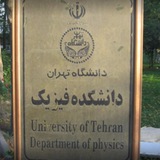
@UTPhysicsWeeklySeminars
We are approaching the deadline for the Women in Nonequilibrium Statistical Physics conference, which will take place 7–11 September 2026 at KU Leuven (Belgium).
The application deadline is 7 June 2026. Please feel free to share this announcement with early-career members of your group or network.
This conference brings together researchers working on nonequilibrium statistical physics across theory, numeric, and experiments to discuss recent advances and current challenges in the field. The scientific scope includes topics such as active and living matter, soft matter far from equilibrium, glasses and driven disordered systems, stochastic processes and thermodynamics, foundations of non-equilibrium theory and computation, and quantum non-equilibrium dynamics.
Beyond the scientific program, the conference is motivated by several broader goals:
to empower early-career researchers by increasing the visibility of role models;
to foster networking in a community that is still underrepresented;
to connect permanent researchers with motivated new talents;
and to provide a platform for open discussion around equality and academic culture.
The conference is open to participants of all gender, and we particularly encourage early-career researchers to apply (Master, PhD, post-Doc). The program will include contributed talks and a poster session, providing many opportunities for participants to present their work.
More information about the conference and the application process can be found here:
https://indico.fys.kuleuven.be/e/muphi.winsp
Indico
Women in Nonequilibrium Statistical Physics
For more conference photos, see Conference Photos. This conference brings together researchers working on nonequilibrium statistical physics across theory, numerics, and experiments to discuss recent advances and current challenges in the field. The scientific…
❤1
@UTPhysicsWeeklySeminars
سمینار هفتگی فیزیک
📌عنوان: هندسه کوانتومی و پیدایش فضا-زمان
👤سخنران : دکتر علی اصغر پرویزی
-دکتری گرانش و کیهان شناسی دانشگاه تهران
-پژوهشگر دانشگاه پنسیلوانیا در رومانی
-پژوهشگر گرانش کوانتومی انستیتو فیزیک نظری دانشگاه وروتسواف لهستان
🔖چکیده:
یکی از پرسشهای اساسی فیزیک مدرن این است که فضا–زمان چگونه میتواند از ساختارهای کوانتومیِ بنیادی پدید آید. در این سخنرانی، ابتدا انگیزهها و اهمیت گرانش کوانتومی را از دیدگاهکیهانشناختی مرور میکنیم و به برخی رویکردهای مکمل مبتنی بر نظریههای مرزی و هولوگرافی میپردازیم.
در ادامه، انتشار میدانهای کوانتومی بر روی فضا-زمانهای کوانتومی را بررسی کرده و نشان میدهیم که چگونه ویژگیهای دینامیکی هندسهٔ کوانتومی، از جمله اثرهای حافظهٔ کوانتومی، اختلالی و تصادفی، میتوانند ردپاهای خاص در دینامیک میدانها برجای بگذارند.
این مجموعهٔ نتایج تصویری روشن از نقش هندسهٔ کوانتومی در پیدایش فضا–زمان ارائه میدهد ...
زمان و محل برگزاری :
شنبه، ۱۶ خرداد ۱۴۰۵،
ساعت ۱۵:۰۰،
دانشکده فیزیک دانشگاه تهران
■برای حضور در سمینار، با نگهبانی هماهنگی شده است.
❤3😢1
دکتر لطیف کاشیگر درگذشت
اخبار انجمن فیزیک ایران
جامعه فیزیک کشور همکاری دلسوز و ارزشمند برای فیزیک را از دست داد. آقای دکتر لطیف کاشیگر، فیزیکدانی آگاه و صادق، که سهمی برجسته در نقش اجتماعی فیزیک در ایران داشت. او بود که پس از انقلاب یکتنه ارتباطی تنگاتنگ با نوآمدگان و پیشینیان جامعهء فیزیک و نیز انجمن فیزیک ایران برقرار کرد. توانست با ...
@psinews
مطالعهی بیشتر در سایت انجمن فیزیک
❤4
@UTPhysicsWeeklySeminars
سمینار هفتگی فیزیک
📌عنوان: از حسگرهای مبتنی بر مواد دوبعدی تا حسگرهای خودمولد: مسیری در توسعه فناوریهای حسگری نوین
👤سخنران : دکتر نسیم رفیعی
پژوهشگر حوزه نانوفیزیو و حسگرها - دکتری دانشگاه صنعتی شریف
🔖چکیده:
رشد سریع فناوریهایی نظیر اینترنت اشیاء (IoT)، سامانههای پوشیدنی و پایش هوشمند سلامت، نیاز به توسعه حسگرهای دقیق، کممصرف، انعطافپذیر و مستقل از منابع انرژی خارجی را بیش از پیش نمایان ساخته است. این سخنرانی مروری بر مسیر پژوهشی اینجانب در طراحی و توسعه نسلهای مختلف حسگرهای نوین، از حسگرهای مبتنی بر نانومواد دوبعدی تا سامانههای حسگری خودمولد، ارائه میدهد.
در نخستین مرحله از این مسیر پژوهشی، تمرکز بر بهینهسازی عملکرد حسگرهای زیستی و کنترل برهمکنشهای سطحی در محیطهای مایع قرار گرفت. در این راستا، با بهرهگیری از روشهایی نظیر دیالکتروفورز (DEP) برای جداسازی ذرات زیستی و نیز غیرفعالسازی (Passivation) الکترودها به کمک لایههای عایق، کاهش نویز الکتریکی و جریانهای پسزمینه حاصل شد که به بهبود حساسیت و پایداری حسگرهای زیستی انجامید.
در ادامه و در دوره دکتری، پژوهشها بر توسعه حسگرهای گازی مبتنی بر مواد دوبعدی و هتروساختارهای نانومقیاس متمرکز شد. در این مرحله، با طراحی ساختارهای ترکیبی مبتنی بر TiS₃ و گرافن، امکان آشکارسازی انتخابپذیر بخارات گازی در دمای اتاق فراهم شد. نتایج این مطالعات نشان داد که مهندسی فصل مشترک مواد دوبعدی و کنترل انتقال بار در ناحیه اتصال، نقش تعیینکنندهای در افزایش حساسیت، سرعت پاسخ و عملکرد حسگری ایفا میکند.
در مرحله بعد و طی فعالیتهای پسادکتری، تمرکز پژوهش به سمت توسعه حسگرهای خودمولد (Self-powered Sensors) و سامانههای پایدار تأمین انرژی تغییر یافت. در این راستا، از پدیدههای تریبوالکتریک و ترموالکتریک برای طراحی حسگرهایی استفاده شد که بدون وابستگی به باتری قادر به تولید انرژی موردنیاز خود هستند. طراحی نانوکامپوزیتهای مهندسیشده برای سامانههای تریبوالکتریک و توسعه ژنراتورهای ترموالکتریک انعطافپذیر با قابلیت برداشت انرژی از اختلاف دمای اندک بدن و محیط، بخشی از این پژوهشها را تشکیل میدهد.
در مجموع، این مسیر پژوهشی چشماندازی برای توسعه سامانههای حسگری هوشمند، انعطافپذیر و خودکفا ارائه میکند که میتوانند در نسل آینده فناوریهای پوشیدنی، سلامت دیجیتال و پایش محیطی نقشی مؤثر ایفا کنند.
📅زمان و محل برگزاری :سه شنبه، ۱۹ خرداد ۱۴۰۵، ساعت ۱۵:۰۰، دانشکده فیزیک دانشگاه تهران
■برای حضور در سمینار، با نگهبانی هماهنگی شده است.
❤1
@UTPhysicsWeeklySeminars
International Conference on Actual
Problems of Molecular Spectroscopy of
Condensed Matter
Samarkand, September 24-26, 2026
E-mail: bekzodxudaykulov30@gmail.com
International Conference on Actual
Problems of Molecular Spectroscopy of
Condensed Matter
Samarkand, September 24-26, 2026
E-mail: bekzodxudaykulov30@gmail.com
@UTPhysicsWeeklySeminars
LISA Symposium
Plenary sessions for the LISA Symposium will be streamed on YouTube
https://lisa-2026.astro.umd.edu/
The list of plenary speakers
https://lisa-2026.astro.umd.edu/speakers.html
LISA Symposium
Plenary sessions for the LISA Symposium will be streamed on YouTube
https://lisa-2026.astro.umd.edu/
The list of plenary speakers
https://lisa-2026.astro.umd.edu/speakers.html
❤1
@UTPhysicsWeeklySeminars
سمینار هفتگی فیزیک
📌Title: Tuning Plasmon-Exciton Coupling in Rhodamine 6G-Coated Silver Nanoislands by Photo-Induced Self-Organization
👤سخنران : دکتر عباس چیمه
عضو هیئت علمی دانشکده فیزیک دانشگاه تهران
📅زمان و محل برگزاری : شنبه، ۶ تیر ۱۴۰۵، ساعت ۱۵:۰۰، دانشکده فیزیک دانشگاه تهران
■برای حضور در سمینار، با نگهبانی هماهنگی شده است.
❤1
@UTPhysicsWeeklySeminars
International Astronomical Union (IAU) Hands-on Workshop (I-HOW) in Radio Astronomy
and
10th Byurakan International Summer School (10BISS)
dedicated to
the 80th Anniversary of the
Byurakan Astrophysical Observatory (BAO)
1-11 September 2026, Byurakan, Armenia
https://www.bao.am/meetings/meetings/IHOW/index.html
SECOND ANNOUNCEMENT
I-HOW in Radio Astronomy will take place on 1-11 September 2026 in the Byurakan Astrophysical Observatory (BAO), Armenia. This I-HOW will be combined with the 10th Byurakan International Summer School (10BISS) for Young Astronomers and additional subjects on “Our Unstable Universe” will be taught. During the Workshop, the students will have lectures and practical tutorial sessions on radio astronomical techniques, radio astronomical facilities, radio astronomical surveys, radio data reduction and analysis, Astrochemistry, Astrobiology, Stars and Nebulae, Galaxies and Cosmology, Astroinformatics and Virtual Observatories, Space Sciences and Technologies, Interdisciplinary and Multidisciplinary Sciences.
The Registration is open from 1 June to 30 June 2026. A Motivation Letter and a Recommendation Letter from the supervisor are required as well. Please register at:
https://www.bao.am/meetings/meetings/IHOW/registration.php
Travel grant applications are also available at:
https://www.bao.am/meetings/meetings/IHOW/support.php
Address: Byurakan Astrophysical Observatory (BAO), Byurakan 0213, Aragatzotn Province, Armenia
Webpage: https://www.bao.am/meetings/meetings/IHOW/index.html
E-mail: 10biss@bao.am
SOC Co-Chair: Areg Mickaelian (phone: +374-91-195914, E-mail: aregmick@yahoo.com)
LOC Co-Chair: Hayk Abrahamyan (+374-94-377550, abrahamyanhayk@gmail.com)
LOC Co-Chair: Gor Mikayelyan (+374-55-515001, gor.mikayelyan87@gmail.com)
LOC Secretary: Ani Davtyan (+374-98-322333, ani.davtian@outlook.com)
@UTPhysicsWeeklySeminars
سمینار هفتگی فیزیک
📌عنوان : از برهمکنشهای کوانتومی تا رایانههای کوانتومی مقیاسپذیر
👤سخنران : دکتر محمدصادق خزعلی
عضو هیئت علمی دانشکده فیزیک دانشگاه تهران
📅زمان و محل برگزاری : شنبه، ۲۰ تیر ۱۴۰۵، ساعت ۱۵:۰۰، دانشکده فیزیک دانشگاه تهران
■برای حضور در سمینار، با نگهبانی هماهنگی شده است.
سمینار هفتگی فیزیک
📌عنوان : از برهمکنشهای کوانتومی تا رایانههای کوانتومی مقیاسپذیر
👤سخنران : دکتر محمدصادق خزعلی
عضو هیئت علمی دانشکده فیزیک دانشگاه تهران
📅زمان و محل برگزاری : شنبه، ۲۰ تیر ۱۴۰۵، ساعت ۱۵:۰۰، دانشکده فیزیک دانشگاه تهران
■برای حضور در سمینار، با نگهبانی هماهنگی شده است.
👎3❤2
IPM Physics Colloquium
Speaker
Dr. Saeed Ansarifard
(School of physics of IPM)
Title of talk:
The Revolution in Reporting: How AI is transforming the study of nature
عنوان:
انقلاب در گزراشدهی: چگونه هوش مصنوعی مطالعه طبیعت را تحت تاثیر قرار میدهد
Date and time:
6-7:30pm, Saturday 18 July 2026 ( 27 Tir 1405)
Venue: Online
https://www.skyroom.online/ch/schoolofphysics/colloquium
Abstract:
Since the invention of writing, our understanding of nature has been built upon reports. Tracing the evolution of scientific reporting offers a unique lens through which to view the evolution of physics itself. Today, with the rise of Large Language Models (LLMs), we stand in the midst of a revolution that is more than a technological shift. From the passive recording of observations to computational objects that can actively drive discovery, we are witnessing a transformation in the way we study nature. In this talk, I will explore how Artificial Intelligence (AI) is reshaping the practice of empirical sciences in its modern form and show that the next generation of experiments will undergo fundamental change. One manifestation of this transformation is the emergence of Foundation Models and self-supervised learning, in which AI systems learn structured representations directly from raw observations, rather than relying on human annotation. This shift changes not only how data are collected, presented, and analyzed, but also how observations are interpreted and transformed into knowledge. As an example, I will present Masked AutoEncoder (MAE) techniques applied to particle physics experiments, demonstrating how self-supervised learning can extract meaningful patterns without relying on extensive labeled datasets. I will then extend these concepts to cosmological observations from the Euclid mission, where similar architectures reveal latent representations.
www.skyroom.online
Conferencing App
WebRTC Powered Conferencing App
@UTPhysicsWeeklySeminars
📣اطلاع رسانی پنجمین کنفرانس ملی میکرو و نانوفناوری
🌐 وب سایت کنفرانس:
https://mntech2026.conf.ikiu.ac.ir
📣اطلاع رسانی پنجمین کنفرانس ملی میکرو و نانوفناوری
🌐 وب سایت کنفرانس:
https://mntech2026.conf.ikiu.ac.ir
👍2
@UTPhysicsWeeklySeminars
Announcing that registration and abstract submission are now open for the 8th IML Workshop on Machine Learning at the LHC.
The IML group looks forward to welcoming participants to CERN, November 9–13, 2026,
Deadline: 15th October, 2026
https://indico.cern.ch/event/1691500/
Announcing that registration and abstract submission are now open for the 8th IML Workshop on Machine Learning at the LHC.
The IML group looks forward to welcoming participants to CERN, November 9–13, 2026,
Deadline: 15th October, 2026
https://indico.cern.ch/event/1691500/
Indico
8th Inter-Experimental LHC Machine Learning Workshop
This is the eight annual workshop of the LPCC inter-experimental machine learning working group. The workshop will be held on 9Nov-13Nov 2026 at CERN in a hybrid format, with remote participation made possible. Confirmed invited speakers Warning If you receive…
@UTPhysicsWeeklySeminars
Workshop Announcement
24th workshop on crystal structure prediction with the USPEX code
Online on November 19-20, 2026.
Crystal structure prediction is transforming materials science from a trial-and-error discipline into a field of rational, AI-driven design. The evolutionary algorithm USPEX has been at the forefront of this revolution, enabling numerous major discoveries. The code is freely available to academic researchers and is recognized for its exceptional efficiency and reliability. Its user community now exceeds 11,500 scientists worldwide and continues to grow rapidly. Our workshop aims to train the next generation of materials scientists through advanced educational initiatives like this workshop. Hands-on training will be done using the USPEX 26.2 version that will be released just before and shown for the first time at the workshop.
This year, our traditional workshop will be held in an online format.
The workshop program includes comprehensive lectures on the fundamentals of materials science and talks on cutting-edge discoveries, followed by detailed practical tutorials led by the USPEX developers.
Topics covered will include:
Structure prediction and computational materials discovery with USPEX
Latest features and support for machine-learning force fields
Visualization and advanced analysis of USPEX data with STMng
Installation of USPEX
Prediction of 3D crystal structures
Predicting likely molecules using USPEX
Structure prediction at nonzero temperatures and including quantum nuclear motion effects
Prediction of molecular crystal structures, including pharmaceuticals
Prediction of new high-temperature superconductors
Variable-composition crystal structure prediction
Multiobjective (Pareto) search for optimal materials
Prediction of molecular crystal structures
💳 Cost of participation: Free
🗣 Language: English
https://events.skoltech.ru/uspex2026
@UTPhysicsWeeklySeminars
سمینار هفتگی فیزیک
📌عنوان: 20 سال بعد از فارغ التحصیلی فیزیک
👤سخنران : حسین توحیدی
دانشآموخته فیزیک دانشگاه تهران، مدیرعامل شرکت دانشبنیان پویا فنآوران کوثر
🔖چکیده:
دانشجوی فیزیک، بعد از فارغ التحصیلی، با دو انتخاب اصلی مواجه میشود؛ 1- ادامه تحصیل و حضور در فضای آکادمیک، 2- ورود به بازار کار و صنعت. اما تفاوت اصلی رشتهی فیزیک با سایر رشتهها بالاخص گرایشهای مهندسی، در واضح نبودن دقیق حوزه فعالیت، بعد از فارغ التحصیلی است. اینجا است که فرد دانش آموختهی فیزیک، علاوه بر چالش ورود به بازار کار، با چالش تبیین خود به عنوان یک فرد متخصص در یک جایگاه درست نیز مواجه می شود. در این ارائه، با یک نگاه واپسگرا، 25 سال مسیر فعالیت از فارغ التحصیلی تا کارآفرینی را بررسی می کنیم.
زمان و محل برگزاری : شنبه، ۱۱ مهر ۱۴۰۵، ساعت ۱۵:۳۰، دانشکده فیزیک دانشگاه تهران
UT.Physics.Seminars
@UTPhysicsWeeklySeminars سمینار هفتگی فیزیک 📌عنوان: 20 سال بعد از فارغ التحصیلی فیزیک 👤سخنران : حسین توحیدی دانشآموخته فیزیک دانشگاه تهران، مدیرعامل شرکت دانشبنیان پویا فنآوران کوثر 🔖چکیده: دانشجوی فیزیک، بعد از فارغ التحصیلی، با دو انتخاب اصلی…
سمینار هفتگی فیزیک
📌عنوان: 20 سال بعد از فارغ التحصیلی فیزیک
👤سخنران : حسین توحیدی
دانشآموخته فیزیک دانشگاه تهران، مدیرعامل شرکت دانشبنیان پویا فنآوران کوثر
🔖چکیده:
دانشجوی فیزیک، بعد از فارغ التحصیلی، با دو انتخاب اصلی مواجه میشود؛ 1- ادامه تحصیل و حضور در فضای آکادمیک، 2- ورود به بازار کار و صنعت. اما تفاوت اصلی رشتهی فیزیک با سایر رشتهها بالاخص گرایشهای مهندسی، در واضح نبودن دقیق حوزه فعالیت، بعد از فارغ التحصیلی است. اینجا است که فرد دانش آموختهی فیزیک، علاوه بر چالش ورود به بازار کار، با چالش تبیین خود به عنوان یک فرد متخصص در یک جایگاه درست نیز مواجه می شود. در این ارائه، با یک نگاه واپسگرا، 25 سال مسیر فعالیت از فارغ التحصیلی تا کارآفرینی را بررسی می کنیم.
زمان و محل برگزاری : شنبه، ۱۱ مهر ۱۴۰۵، ساعت ۱۵:۳۰، دانشکده فیزیک دانشگاه تهران
❤4👍2👎1😢1👌1