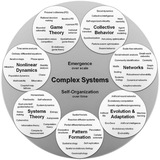
Complex Systems Studies
https://youtu.be/Hj5b0ieVWSo?si=l62CuQgzBXZ-oVI7
Not Even Wrong
This Week’s Hype
The string theory hype machine will never die. This week we have Press releases from RPI and Northeastern tell us Scientists Use String Theory to Crack the Code of Natural Networks and How String T…
👍1
ESPIDAM, the European Summer Program in Infectious Disease Analysis and Modelling
June 2026 for PhD students, Post Docs, Public Health scientists and others interested, supported by Stockholm University and the Nordic Research Council NordForsk.
https://www.statistics.su.se/english/divisions/department-of-mathematics/research/conferences-and-seminars/espidam-the-european-summer-program-in-infectious-disease-analysis-and-modelling
June 2026 for PhD students, Post Docs, Public Health scientists and others interested, supported by Stockholm University and the Nordic Research Council NordForsk.
https://www.statistics.su.se/english/divisions/department-of-mathematics/research/conferences-and-seminars/espidam-the-european-summer-program-in-infectious-disease-analysis-and-modelling
Bottom-up mesoscopic coarse-graining of soft matter
https://www.nature.com/articles/s42254-025-00915-4
https://www.nature.com/articles/s42254-025-00915-4
Nature
Bottom-up mesoscopic coarse-graining of soft matter
Nature Reviews Physics - Bottom-up mesoscopic coarse-graining of soft matter
👍2
US science after a year of Trump
A series of graphics reveals how the Trump administration has sought historic cuts to science and the research workforce.
go.nature.com/4jSm0ui
A series of graphics reveals how the Trump administration has sought historic cuts to science and the research workforce.
go.nature.com/4jSm0ui
Nature
US science after a year of Trump: what has been lost and what remains
A series of graphics reveals how the Trump administration has sought historic cuts to science and the research workforce.
William Bialek: Scaling, criticality, and the statistical physics of biological networks - Class 1
School on biological physics across scales: phase transitions
https://youtu.be/QK2SCwNHzaA
Other lectures: https://www.ictp-saifr.org/sbpas2026/
School on biological physics across scales: phase transitions
https://youtu.be/QK2SCwNHzaA
Other lectures: https://www.ictp-saifr.org/sbpas2026/
YouTube
William Bialek: Scaling, criticality, and the statistical physics of biological networks - Class 1
ICTP-SAIFR
School on biological physics across scales: phase transitions
January 12 – 23, 2026
Speakers:
William Bialek (Princeton University, USA): Scaling, criticality, and the statistical physics of biological networks
More Information:
https://www.ictp…
School on biological physics across scales: phase transitions
January 12 – 23, 2026
Speakers:
William Bialek (Princeton University, USA): Scaling, criticality, and the statistical physics of biological networks
More Information:
https://www.ictp…
👍4
Transmission Networks and Intervention Effects From SARS-CoV-2 Genomic and Social Network Data in Denmark
https://www.medrxiv.org/content/10.64898/2026.01.08.26343683v1
Decision-making by governments during disease outbreaks is increasingly reliant on large-scale pathogen genomics and detailed individual-level data. We use 293,841 SARS-CoV-2 genomes collected in Denmark, between September 1st 2020 and December 31st 2021, and combine these with comprehensive individual-level data on settings, including households, schools, workplaces and family relationships, to infer plausible transmission pathways. Next, we use the plausible transmission pathways to assess the effectiveness of specific non-pharmaceutical interventions (NPIs) and quantify transmission heterogeneities, providing a more detailed understanding than is possible from aggregate national estimates. School restrictions were associated with reduced community transmission; face coverings and gathering restrictions were associated with reduced transmission across all settings. We find that those vaccinated with two doses, compared to the unvaccinated, had onward transmission reduced by 23.5% (95% highest posterior density interval: 21.5-25.2%). Our proposed approach is pathogen agnostic, and can be used in future outbreaks where genomic data and data on social relationships are available.
https://www.medrxiv.org/content/10.64898/2026.01.08.26343683v1
Decision-making by governments during disease outbreaks is increasingly reliant on large-scale pathogen genomics and detailed individual-level data. We use 293,841 SARS-CoV-2 genomes collected in Denmark, between September 1st 2020 and December 31st 2021, and combine these with comprehensive individual-level data on settings, including households, schools, workplaces and family relationships, to infer plausible transmission pathways. Next, we use the plausible transmission pathways to assess the effectiveness of specific non-pharmaceutical interventions (NPIs) and quantify transmission heterogeneities, providing a more detailed understanding than is possible from aggregate national estimates. School restrictions were associated with reduced community transmission; face coverings and gathering restrictions were associated with reduced transmission across all settings. We find that those vaccinated with two doses, compared to the unvaccinated, had onward transmission reduced by 23.5% (95% highest posterior density interval: 21.5-25.2%). Our proposed approach is pathogen agnostic, and can be used in future outbreaks where genomic data and data on social relationships are available.
medRxiv
Transmission Networks and Intervention Effects From SARS-CoV-2 Genomic and Social Network Data in Denmark
Decision-making by governments during disease outbreaks is increasingly reliant on large-scale pathogen genomics and detailed individual-level data. We use 293,841 SARS-CoV-2 genomes collected in Denmark, between September 1st 2020 and December 31st 2021…
ISCS 2026 invites applications and nominations for two awards recognizing outstanding early-career contributions in Complex Systems.
Doctoral Student Award
Submission deadline: March 11, 2026
This award is open to Ph.D. students and aims to highlight promising doctoral research. Candidates are invited to present their work in a five-minute video addressed to a lay audience. The presentation should be clear, accessible, and convincing.
More information and submission details:
https://iutdijon.u-bourgogne.fr/ccs-france/call-doctoral-student-award/
Young Researcher Award
Submission deadline: March 11, 2026
This award recognizes early-career researchers (up to five years after Ph.D. defense) who have made significant contributions and demonstrated leadership in Complex Systems related fields.
More information and nomination details:
https://iutdijon.u-bourgogne.fr/ccs-france/call-young-resarcher-award/
Doctoral Student Award
Submission deadline: March 11, 2026
This award is open to Ph.D. students and aims to highlight promising doctoral research. Candidates are invited to present their work in a five-minute video addressed to a lay audience. The presentation should be clear, accessible, and convincing.
More information and submission details:
https://iutdijon.u-bourgogne.fr/ccs-france/call-doctoral-student-award/
Young Researcher Award
Submission deadline: March 11, 2026
This award recognizes early-career researchers (up to five years after Ph.D. defense) who have made significant contributions and demonstrated leadership in Complex Systems related fields.
More information and nomination details:
https://iutdijon.u-bourgogne.fr/ccs-france/call-young-resarcher-award/
2602.06923v1.pdf
14.4 MB
Transformers don't learn Newton's laws? They learn Kepler's laws!
https://kindxiaoming.github.io/blog/2026/kepler-newton/
https://kindxiaoming.github.io/blog/2026/kepler-newton/
👍3
What is emergence, after all?
https://academic.oup.com/pnasnexus/article/5/2/pgag010/8429832.
In this perspective paper, I clarify the scientific meaning of emergence as a measurable and physically grounded phenomenon. Through concrete examples, such as temperature, magnetism, and herd immunity in social networks, I review how collective behavior can arise from local interactions that are constrained by global boundaries. By refining the concept of emergence, it is possible to gain a clearer and more grounded understanding of complex systems. My goal is to show that emergence, when properly framed, offers not mysticism, but rather insight.
Science is compatible with a form of pluralism that affirms the reality of higher-level causal powers. The word “emergence” is widely used in the field of complex systems. While vague or mystical references to emergence may sound compelling, selling complexity science by mystifying emergence and invoking some spiritual dimensions is a great disservice.
https://academic.oup.com/pnasnexus/article/5/2/pgag010/8429832.
In this perspective paper, I clarify the scientific meaning of emergence as a measurable and physically grounded phenomenon. Through concrete examples, such as temperature, magnetism, and herd immunity in social networks, I review how collective behavior can arise from local interactions that are constrained by global boundaries. By refining the concept of emergence, it is possible to gain a clearer and more grounded understanding of complex systems. My goal is to show that emergence, when properly framed, offers not mysticism, but rather insight.
Science is compatible with a form of pluralism that affirms the reality of higher-level causal powers. The word “emergence” is widely used in the field of complex systems. While vague or mystical references to emergence may sound compelling, selling complexity science by mystifying emergence and invoking some spiritual dimensions is a great disservice.
👍8
Spin Glass Concepts in Computer Science, Statistics, and Learning
Spin glass theory studies the structure of sublevel sets and minima (or near-minima) of certain classes of random functions in high dimension. Near-minima of random functions also play an important role in high-dimensional statistics and statistical learning, where minimizing the empirical risk (which is a random function of the model parameters) is the method of choice for learning a statistical model from noisy data. Finally, near-minima of random functions are obviously central to average-case analysis of optimization algorithms. Computer science, statistics, and machine learning naturally lead to questions that are traditionally not addressed within physics and mathematical physics. I will try to explain how ideas from spin glass theory have seeded recent developments in these fields.
https://arxiv.org/abs/2602.23326
Spin glass theory studies the structure of sublevel sets and minima (or near-minima) of certain classes of random functions in high dimension. Near-minima of random functions also play an important role in high-dimensional statistics and statistical learning, where minimizing the empirical risk (which is a random function of the model parameters) is the method of choice for learning a statistical model from noisy data. Finally, near-minima of random functions are obviously central to average-case analysis of optimization algorithms. Computer science, statistics, and machine learning naturally lead to questions that are traditionally not addressed within physics and mathematical physics. I will try to explain how ideas from spin glass theory have seeded recent developments in these fields.
https://arxiv.org/abs/2602.23326
arXiv.org
Spin Glass Concepts in Computer Science, Statistics, and Learning
Spin glass theory studies the structure of sublevel sets and minima (or near-minima) of certain classes of random functions in high dimension. Near-minima of random functions also play an...
Network Modeling and Analysis of Spatio-Temporal Correlations in Multivariate Time Series
https://vimeo.com/1170388794
https://vimeo.com/1170388794
Vimeo
Network Modeling and Analysis of Spatio-Temporal Correlations in Multivariate Time Series
Binghamton Center of Complex Systems (CoCo) Seminar March 4, 2026 Amanda Goodrick (Mathematics and Statistics, Slippery Rock University) "Network Modeling and Analysis of Spatio-Temporal Correlations in Multivariate Time Series"
👍1
3rd European Summer Program in Infectious Disease Analysis and Modelling (ESPIDAM)
Time: June 22-26, 2026
Location: Stockholm University, Sweden
Registration: Is now open. Early bird registration to March 31. Registration closes May 31.
Suitable participants: PhD students, PostDocs, Public Health scientists and others interested
Structure: The summer program consists of 8 course modules, 4 the first half week and 4 the second half week. Participants can register to one or two modules.
More information: www.su.se/math/espidam
Time: June 22-26, 2026
Location: Stockholm University, Sweden
Registration: Is now open. Early bird registration to March 31. Registration closes May 31.
Suitable participants: PhD students, PostDocs, Public Health scientists and others interested
Structure: The summer program consists of 8 course modules, 4 the first half week and 4 the second half week. Participants can register to one or two modules.
More information: www.su.se/math/espidam
Nicole’s guide to writing research statements
https://quantumfrontiers.com/2025/08/10/nicoles-guide-to-writing-research-statements/
https://quantumfrontiers.com/2025/08/10/nicoles-guide-to-writing-research-statements/
Quantum Frontiers
Nicole’s guide to writing research statements
Sunflowers are blooming, stores are trumpeting back-to-school sales, and professors are scrambling to chart out the courses they planned to develop in July. If you’re applying for an academic job t…
Stochastic_processes_and_statistical_methods_in_mathematical_biology.pdf
85.6 KB
#PhD student in Mathematical Statistics
https://su.varbi.com/en/what:job/jobID:911059/type:job/where:4/apply:1
The Department of Mathematics of Stockholm University is hiring a PhD student to work on stochastic processes and/or statistical methods in mathematical biology
https://su.varbi.com/en/what:job/jobID:911059/type:job/where:4/apply:1
The Department of Mathematics of Stockholm University is hiring a PhD student to work on stochastic processes and/or statistical methods in mathematical biology
The Master's programme Complex Systems and Policy (CS&P) offers a unique approach to future-focused policymaking.
https://www.uva.nl/en/programmes/masters/complex-systems-and-policy/complex-systems-and-policy.html?cb
https://www.uva.nl/en/programmes/masters/complex-systems-and-policy/complex-systems-and-policy.html?cb
University of Amsterdam
Master's Complex Systems and Policy
The Master's programme Complex Systems and Policy (CS&P) aims to equip you with the tools to navigate and address complex societal challenges about health and sustainability and cooperate with different stakeholders.
👍5
Dennett's Real Patterns in Science and Nature | Freely available
https://direct.mit.edu/books/oa-edited-volume/6112/Dennett-s-Real-Patterns-in-Science-and-Nature
https://direct.mit.edu/books/oa-edited-volume/6112/Dennett-s-Real-Patterns-in-Science-and-Nature
MIT Press
Dennett's Real Patterns in Science and Nature
How the concept of a pattern, as understood in information science and applied in contemporary AI, can address deep questions in science and philosophy.The
👍2
Message passing and cyclicity transition
Message passing, also known as belief propagation, is a versatile framework for analyzing models defined on graphs. Its most prototypical application is percolation; yet, the interpretation of the message passing formulation of percolation remains elusive. We show that the message passing solutions commonly associated with the probability of belonging to the giant component actually identify reachability from cycles. This interpretation generally applies to bond and site percolation on any directed or undirected networks. Our findings highlight the distinction between transition in cyclicity and the emergence of the giant component.
https://arxiv.org/abs/2604.01201
Message passing, also known as belief propagation, is a versatile framework for analyzing models defined on graphs. Its most prototypical application is percolation; yet, the interpretation of the message passing formulation of percolation remains elusive. We show that the message passing solutions commonly associated with the probability of belonging to the giant component actually identify reachability from cycles. This interpretation generally applies to bond and site percolation on any directed or undirected networks. Our findings highlight the distinction between transition in cyclicity and the emergence of the giant component.
https://arxiv.org/abs/2604.01201
arXiv.org
Message passing and cyclicity transition
Message passing, also known as belief propagation, is a versatile framework for analyzing models defined on graphs. Its most prototypical application is percolation; yet, the interpretation of the...
Theoretical computer science notes from Epsilon Camp for exceptional 11- and 12-year-olds
by Scott Aaronson
https://www.scottaaronson.com/tcs.pdf
Lecture 1: Bits
Lecture 2: Gates
Lecture 3: Finite Automata
Lecture 4: Turing Machines
Lecture 5: Big Numbers
Lecture 6: Complexity, or Number of Operations
Lecture 7: Polynomial vs. Exponential
Lecture 8: The P vs. NP Problem
Lecture 9: NP-completeness
Lecture 10: Foundations of Cryptography
Lecture 11: Public-Key Cryptography and Quantum Computing
by Scott Aaronson
https://www.scottaaronson.com/tcs.pdf
Lecture 1: Bits
Lecture 2: Gates
Lecture 3: Finite Automata
Lecture 4: Turing Machines
Lecture 5: Big Numbers
Lecture 6: Complexity, or Number of Operations
Lecture 7: Polynomial vs. Exponential
Lecture 8: The P vs. NP Problem
Lecture 9: NP-completeness
Lecture 10: Foundations of Cryptography
Lecture 11: Public-Key Cryptography and Quantum Computing
Why Do We Tell Ourselves Scary Stories About AI? | Quanta Magazine
https://www.quantamagazine.org/why-do-we-tell-ourselves-scary-stories-about-ai-20260410/
https://www.quantamagazine.org/why-do-we-tell-ourselves-scary-stories-about-ai-20260410/
Quanta Magazine
Why Do We Tell Ourselves Scary Stories About AI?
Our tales of AI developing the will to survive, commandeer resources, and manipulate people say more about us than they do about language models.