Forwarded from گفتگوهای سار
#کنفرانس_سار_بهار_98
👤 سخنرانی سیدعلی حسینی با موضوع "اقتصاد پیچیدگی، نظریه بازی ها و نقش دولت ها در تله اجتماعی"
📹 لینک ویدیو و پادکست سخنرانی:
http://sar.inmost.ir/?page_id=13942
@sarconf
👤 سخنرانی سیدعلی حسینی با موضوع "اقتصاد پیچیدگی، نظریه بازی ها و نقش دولت ها در تله اجتماعی"
📹 لینک ویدیو و پادکست سخنرانی:
http://sar.inmost.ir/?page_id=13942
@sarconf
The Department of Network and Data Science at the Central European University is announcing *FIVE* fully funded fellowships for its #PhD Program in Network Science! 👩🎓
https://t.co/GAIFWd1A7R
Application deadline is: January 30 2020 📢
https://t.co/GAIFWd1A7R
Application deadline is: January 30 2020 📢
💰 I’m seeking to hire an excellent postdoctoral researcher into my group, in networks/data/modelling/CSS, with a focus on social spreading phenomena. To apply, use keyword “computational social science” at https://t.co/iRzNKeo7uD. Closing date Fri 15 Nov, midday IST.
#postdoc
#postdoc
The Max Planck Institute for Biological Cybernetics and the University of Tübingen invite students from all over the world to apply for their interdisciplinary 5-year PhD program leading to a PhD in Neuroscience. Full funding will be available for top-ranked applicants.
We are seeking talented, curious and open-minded young scientists with strong backgrounds in neuroscience, biomedical sciences, computational science, applied mathematics, statistics, artificial intelligence, or engineering. Successful candidates will possess a burning ambition to shape the future of neuroscience and the ability to thrive in a fast-paced, interdisciplinary, environment.
The application deadline is December 15, 2019. Please visit:
https://www.kyb.tuebingen.mpg.de/phd-program
for more details and information about applying.
The PhD program is a collaboration between the Max Planck Institute for Biological Cybernetics and the University of Tübingen. It is closely affiliated with the renowned Graduate Training Centre of Neuroscience, the centerpiece of neuroscience training in Tübingen. Students (who should have been awarded a Bachelor's degree by September 2020) will receive a broad interdisciplinary training in neuroscience, including expert teaching by international renowned scientists and individual and intensive mentoring.
Potential research topics cover a variety of fields in systems neuroscience, cognitive and behavioral neuroscience, computational neuroscience, translational and clinical neuroscience as well as cellular and molecular neuroscience.
Teaching and research are conducted in English.
We are seeking talented, curious and open-minded young scientists with strong backgrounds in neuroscience, biomedical sciences, computational science, applied mathematics, statistics, artificial intelligence, or engineering. Successful candidates will possess a burning ambition to shape the future of neuroscience and the ability to thrive in a fast-paced, interdisciplinary, environment.
The application deadline is December 15, 2019. Please visit:
https://www.kyb.tuebingen.mpg.de/phd-program
for more details and information about applying.
The PhD program is a collaboration between the Max Planck Institute for Biological Cybernetics and the University of Tübingen. It is closely affiliated with the renowned Graduate Training Centre of Neuroscience, the centerpiece of neuroscience training in Tübingen. Students (who should have been awarded a Bachelor's degree by September 2020) will receive a broad interdisciplinary training in neuroscience, including expert teaching by international renowned scientists and individual and intensive mentoring.
Potential research topics cover a variety of fields in systems neuroscience, cognitive and behavioral neuroscience, computational neuroscience, translational and clinical neuroscience as well as cellular and molecular neuroscience.
Teaching and research are conducted in English.
🎇 ICTP is now accepting applications for the Diploma Program for the academic year 2020-2021!
Apply in Mathematics, Condensed Matter Physics, High Energy Physics, Earth System Physics, and
Quantitative Life Sciences.
Deadline: 29 February 2020.
https://diploma.ictp.it/
http://ictp.it/c2vqd
Apply in Mathematics, Condensed Matter Physics, High Energy Physics, Earth System Physics, and
Quantitative Life Sciences.
Deadline: 29 February 2020.
https://diploma.ictp.it/
http://ictp.it/c2vqd
Mapping the physics research space: a machine learning approach
“scientific knowledge maps based on a machine learning approach....where it is possible to measure the similarity or distance between different research topics and knowledge domains”
https://t.co/Gomu8q9iNO
“scientific knowledge maps based on a machine learning approach....where it is possible to measure the similarity or distance between different research topics and knowledge domains”
https://t.co/Gomu8q9iNO
Nature’s reach: narrow work has broad impact
“Nature publishes mostly specialized papers...; these tend to reference a narrower range of disciplines.... Usually, however, Nature papers are cited by a broader range of disciplines than average”
https://t.co/LlyMnDs2ZA
“Nature publishes mostly specialized papers...; these tend to reference a narrower range of disciplines.... Usually, however, Nature papers are cited by a broader range of disciplines than average”
https://t.co/LlyMnDs2ZA
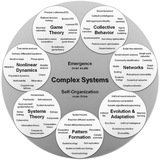
Complex Systems Studies
Nature’s reach: narrow work has broad impact “Nature publishes mostly specialized papers...; these tend to reference a narrower range of disciplines.... Usually, however, Nature papers are cited by a broader range of disciplines than average” https://t.co/LlyMnDs2ZA
YouTube
A network of science: 150 years of Nature papers
Science is a network, each paper linking those that came before with those that followed. In an exclusive analysis, researchers have delved into Nature's part of that network. We explore their results, taking you on a tour of 150 years of interconnected…
💰 ترکیه
We are seeking to hire two #postdocs and two #PhD students in #DynamicalSystems, #NetworkScience, #StatisticalLearning.
More information: https://t.co/E76jWXrEww
We are seeking to hire two #postdocs and two #PhD students in #DynamicalSystems, #NetworkScience, #StatisticalLearning.
More information: https://t.co/E76jWXrEww
Forwarded from Complex Networks (SBU)
#سمینارهای_هفتگی
عنوان:
زمان بحرانی در تشکیل ساختار توازن شبکه کامل
🗣 محمدشرافتی - دانشگاه شهید بهشتی
⏰ دوشنبه، 20 آبان - ساعت ۱۶:۰۰
🏛 محل برگزاری: سالن ابنهیثم
~~~~~~~~~~~~~~~~
🕸 مرکز شبکههای پیچیده و علم داده اجتماعی دانشگاه شهید بهشتی
تماس با ما: @ccnsd_admin
🕸 @CCNSD 🔗 ccnsd.ir
—————————————
عنوان:
زمان بحرانی در تشکیل ساختار توازن شبکه کامل
🗣 محمدشرافتی - دانشگاه شهید بهشتی
⏰ دوشنبه، 20 آبان - ساعت ۱۶:۰۰
🏛 محل برگزاری: سالن ابنهیثم
~~~~~~~~~~~~~~~~
🕸 مرکز شبکههای پیچیده و علم داده اجتماعی دانشگاه شهید بهشتی
تماس با ما: @ccnsd_admin
🕸 @CCNSD 🔗 ccnsd.ir
—————————————
Forwarded from Sitpor.org سیتپـــــور
خوشحالم که پروژه «#پیچیدگی_برای_همه» هماکنون با این نشانی قابل دسترسه:
💡 complexity.sitpor.org
سعی کردم روایتهای مختلفی از پیچیدگی رو به نمایش بذارم برای مردم. روایتهایی که طی این چند سال تعریفشون کرده بودم. امیدوارم که بپسندید.
#شرح_پیچیدگی #complexityexplained
💡 complexity.sitpor.org
سعی کردم روایتهای مختلفی از پیچیدگی رو به نمایش بذارم برای مردم. روایتهایی که طی این چند سال تعریفشون کرده بودم. امیدوارم که بپسندید.
#شرح_پیچیدگی #complexityexplained
Forwarded from انجمن علمی فیزیک بهشتی (SBU)
#سمینار_عمومی
Structural Analysis of Signed Network with a Focus on Balance Theory
- سهشنبه ۲۱ آبان؛ ساعت ۱۶:۳۰ الی ۱۷:۳۰
- تالار ابن هیثم، دانشکده فیزیک
کانال انجمن علمی فیزیک بهشتی
@sbu_physics
Structural Analysis of Signed Network with a Focus on Balance Theory
- سهشنبه ۲۱ آبان؛ ساعت ۱۶:۳۰ الی ۱۷:۳۰
- تالار ابن هیثم، دانشکده فیزیک
کانال انجمن علمی فیزیک بهشتی
@sbu_physics
The Johannes Kepler University Linz (JKU), Austria, is looking for
doctoral and post-doctoral researchers in machine learning or
knowledge discovery in databases for the newly formed Computational
Data Analytics group of Prof. Johannes Fürnkranz. We are particularly
looking for researchers in one or
more of the following areas
• Interpretability in AI
• Inductive Rule Learning
• Preference Learning
• Multi-Label Classification
• Data Mining and Knowledge Discovery
• Monte-Carlo Tree Search
• Machine Learning and Game Playing
Job description:
• Conduct independent research and collaborate in
machine learning projects
• Publish in renowned international journals and conferences
• Supervise students and support lectures of the group
Requirements:
1. Master’s Degree or Ph.D. in Computer Science or a related area
2. Strong background and track record in machine learning or
knowledge discovery
3. Knowledge and prior work in one or more of the above-mentioned
areas is a plus
4. Willingness and ability to work in a team and to support
students and lectures
About the group:
The Computational Data Analytics group at JKU Linz has started in
October 2019, within the Institute for Application-Oriented
Knowledge Processing (FAW) [1]. Together with the existing groups of
Prof. Sepp Hochreiter (Machine Learning) or Prof. Gerhard Widmer
(Computational Perception), the Computer Science Department of JKU
Linz [2] has become a leading center for machine learning and
artificial intelligence research in Austria and beyond. In Winter Term
2019, JKU has started the first Bachelor’s [3] and Master’s [4] study
programs in Artificial Intelligence in Austria.
About the location:
The area offers excellent quality of living in the heart of Europe -
close to the alps between Vienna, Salzburg, Prague and Munich. Linz
provides a superb cultural environment, e.g. with the Ars Electronica
Festival and the nearby Salzburg Festival. Moreover, the
world-cultural heritage sites Hallstatt and Český Krumlov are less
than two hours away. The picturesque and versatile landscape provides
countless options for recreation and sports in nature (skiing, hiking,
climbing, cycling, and many more).
How to apply:
Prospective applicants interested in these positions are requested to
electronically send an application via the online portal
http://jku.at/application.
Please specify Job Reference Number 3989 (for Ph.D. student) or 3990
(for Post-Doc) in your application.
Please provide us with
- a CV
- a research statement concerning one or more of the above-mentioned
areas, and
- a sample of your writing in English or German (thesis, publication, …)
The positions are open until filled, next decisions will be made on
November 23th, 2019. If you have questions, please contact Prof.
Johannes Fürnkranz (johannes.fuernkranz@jku.at).
References:
[1]
https://www.jku.at/en/institute-for-application-oriented-knowledge-processing/
[2] http://informatik.jku.at/
[3]
https://www.jku.at/en/degree-programs/types-of-degree-programs/bachelors-and-diploma-degree-programs/ba-artificial-intelligence/
[4]
https://www.jku.at/en/degree-programs/types-of-degree-programs/masters-degree-programs/ma-artificial-intelligence/
--
Johannes Fuernkranz
Computational Data Analytics
JKU Linz, Austria
doctoral and post-doctoral researchers in machine learning or
knowledge discovery in databases for the newly formed Computational
Data Analytics group of Prof. Johannes Fürnkranz. We are particularly
looking for researchers in one or
more of the following areas
• Interpretability in AI
• Inductive Rule Learning
• Preference Learning
• Multi-Label Classification
• Data Mining and Knowledge Discovery
• Monte-Carlo Tree Search
• Machine Learning and Game Playing
Job description:
• Conduct independent research and collaborate in
machine learning projects
• Publish in renowned international journals and conferences
• Supervise students and support lectures of the group
Requirements:
1. Master’s Degree or Ph.D. in Computer Science or a related area
2. Strong background and track record in machine learning or
knowledge discovery
3. Knowledge and prior work in one or more of the above-mentioned
areas is a plus
4. Willingness and ability to work in a team and to support
students and lectures
About the group:
The Computational Data Analytics group at JKU Linz has started in
October 2019, within the Institute for Application-Oriented
Knowledge Processing (FAW) [1]. Together with the existing groups of
Prof. Sepp Hochreiter (Machine Learning) or Prof. Gerhard Widmer
(Computational Perception), the Computer Science Department of JKU
Linz [2] has become a leading center for machine learning and
artificial intelligence research in Austria and beyond. In Winter Term
2019, JKU has started the first Bachelor’s [3] and Master’s [4] study
programs in Artificial Intelligence in Austria.
About the location:
The area offers excellent quality of living in the heart of Europe -
close to the alps between Vienna, Salzburg, Prague and Munich. Linz
provides a superb cultural environment, e.g. with the Ars Electronica
Festival and the nearby Salzburg Festival. Moreover, the
world-cultural heritage sites Hallstatt and Český Krumlov are less
than two hours away. The picturesque and versatile landscape provides
countless options for recreation and sports in nature (skiing, hiking,
climbing, cycling, and many more).
How to apply:
Prospective applicants interested in these positions are requested to
electronically send an application via the online portal
http://jku.at/application.
Please specify Job Reference Number 3989 (for Ph.D. student) or 3990
(for Post-Doc) in your application.
Please provide us with
- a CV
- a research statement concerning one or more of the above-mentioned
areas, and
- a sample of your writing in English or German (thesis, publication, …)
The positions are open until filled, next decisions will be made on
November 23th, 2019. If you have questions, please contact Prof.
Johannes Fürnkranz (johannes.fuernkranz@jku.at).
References:
[1]
https://www.jku.at/en/institute-for-application-oriented-knowledge-processing/
[2] http://informatik.jku.at/
[3]
https://www.jku.at/en/degree-programs/types-of-degree-programs/bachelors-and-diploma-degree-programs/ba-artificial-intelligence/
[4]
https://www.jku.at/en/degree-programs/types-of-degree-programs/masters-degree-programs/ma-artificial-intelligence/
--
Johannes Fuernkranz
Computational Data Analytics
JKU Linz, Austria
JKU - Johannes Kepler Universität Linz
Artificial Intelligence - Bachelor's Degree
Das neue Bachelorstudium Artificial Intelligence. Lerne alles über künstliche Intelligenz. Details zum Studium, Schwerpunkte, Berufsaussichten findest du hier.
Nonlinearity + Networks: A 2020 Vision
“topics include temporal networks, stochastic and deterministic dynamical processes on networks, adaptive networks, and network structure and dynamics”
https://t.co/5wtIolAQt9
“topics include temporal networks, stochastic and deterministic dynamical processes on networks, adaptive networks, and network structure and dynamics”
https://t.co/5wtIolAQt9
Network Inference in Systems Biology: Recent Developments, Challenges, and Applications.
https://t.co/ngN5YUVth
One of the most interesting, difficult, and potentially useful topics in computational biology is the inference of gene regulatory networks (GRNs) from expression data. Although researchers have been working on this topic for more than a decade and much progress has been made, it remains an unsolved problem and even the most sophisticated inference algorithms are far from perfect. In this paper, we review the latest developments in network inference, including state-of-the-art algorithms like PIDC, Phixer, and more. We also discuss unsolved computational challenges, including the optimal combination of algorithms, integration of multiple data sources, and pseudo-temporal ordering of static expression data. Lastly, we discuss some exciting applications of network inference in cancer research, and provide a list of useful software tools for researchers hoping to conduct their own network inference analyses.
https://t.co/ngN5YUVth
One of the most interesting, difficult, and potentially useful topics in computational biology is the inference of gene regulatory networks (GRNs) from expression data. Although researchers have been working on this topic for more than a decade and much progress has been made, it remains an unsolved problem and even the most sophisticated inference algorithms are far from perfect. In this paper, we review the latest developments in network inference, including state-of-the-art algorithms like PIDC, Phixer, and more. We also discuss unsolved computational challenges, including the optimal combination of algorithms, integration of multiple data sources, and pseudo-temporal ordering of static expression data. Lastly, we discuss some exciting applications of network inference in cancer research, and provide a list of useful software tools for researchers hoping to conduct their own network inference analyses.